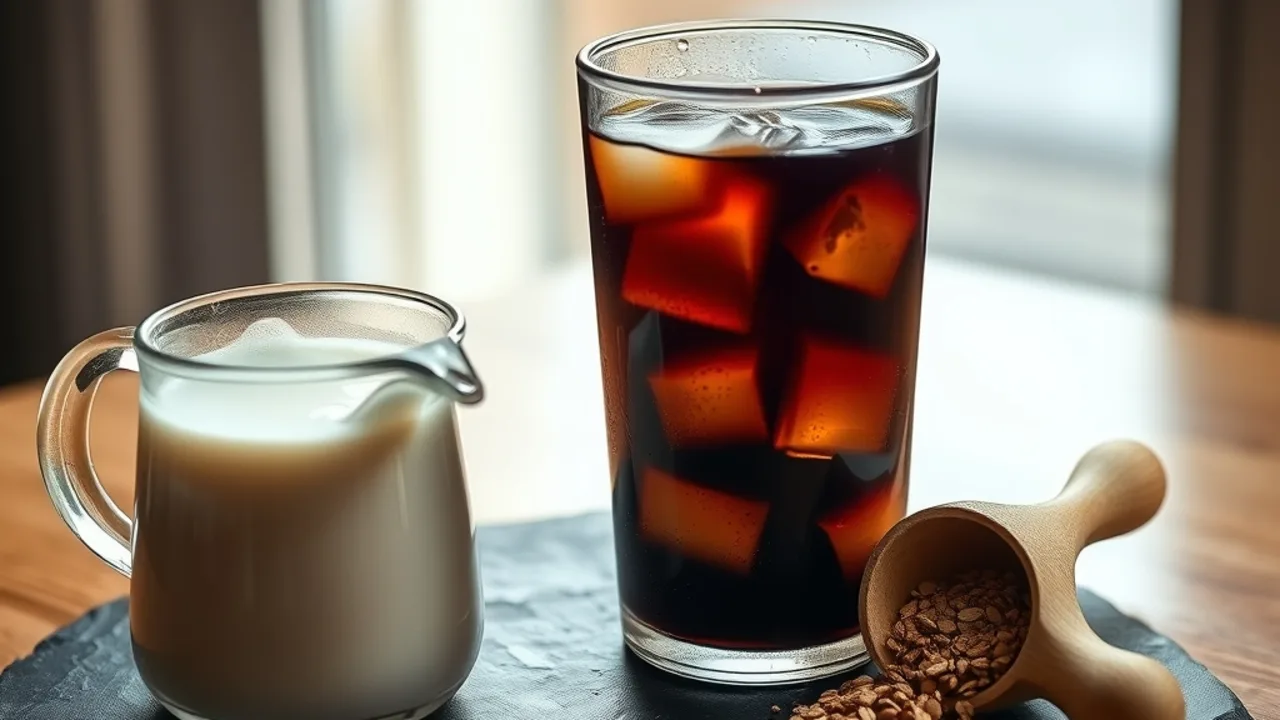
A cold glass of coffee on a warm morning solves two problems at once: heat and fatigue. Yet pulling a pitcher of cold brew from the refrigerator yields a completely different drink than pouring hot coffee over a glass of ice. The difference lies in how water temperature alters the chemistry of the coffee bean.
Cold brew is ground coffee steeped in cold or room-temperature water for 12 to 24 hours, producing a smooth, low-acid concentrate. Traditional iced coffee is coffee brewed hot at double strength, then immediately chilled over ice. Heat extracts bright fruit acids quickly, while long cold steeping extracts heavy chocolate and nutty compounds slowly.
In This Article
- Cold Brew vs. Iced Coffee: The Essential Differences Explained
- Flavor Profile, Acidity, and Mouthfeel Breakdown
- Caffeine Content: Which Cold Coffee Packs More Energy?
- How to Make Smooth Cold Brew Concentrate at Home
- How to Make Perfect Traditional Iced Coffee Without Dilution
- Storage, Shelf Life, and Food Safety Practices
- Frequently Asked Questions
Cold Brew vs. Iced Coffee: The Essential Differences Explained
Water temperature acts as an accelerator during coffee extraction. Hot water between 195°F and 205°F rapidly dissolves organic acids, soluble sugars, and volatile aromatic oils within three to five minutes. Cold water lacks the kinetic energy to dissolve those compounds quickly, requiring between 12 and 24 hours to pull flavor from the coffee grounds.
Because heat is absent during cold brew steeping, volatile organic acids that cause sharp bitterness remain locked inside the grounds. Hot-brewed coffee that gets chilled over ice retains those crisp acids. That basic mechanical difference creates two distinct beverages: one dark, heavy, and sweet; the other light, aromatic, and bright.
Flavor Profile, Acidity, and Mouthfeel Breakdown
Cold brew sits heavy on the tongue. Its low perceived titratable acidity gives it a rounded profile dominated by dark cocoa, roasted nuts, and deep caramel. That lower acid perception makes cold brew gentler for drinkers with sensitive stomachs, though its actual chemical pH remains close to standard coffee (around 5.0 to 5.4, compared to hot coffee at 4.8 to 5.0). Scientific analysis published in Comparative Decoding of Physicochemical and Flavor Profiles confirms that thermal extraction pulls out significantly higher concentrations of total titratable acids than long cold steeping.
Traditional iced coffee offers a punchier, livelier flavor. You taste citrus, berry, or floral notes accompanied by a crisp, light body. If you pour hot coffee straight onto ice without adjusting your brewing ratio, the heat melts the ice instantly. The result is a thin, sour glass of diluted coffee. Correct technique preserves both flavor intensity and body.
Caffeine Content: Which Cold Coffee Packs More Energy?
Caffeine levels depend on coffee-to-water ratios rather than water temperature alone. Cold brew is typically prepared as a concentrated batch using a dense ratio of 1 part coffee to 4 parts water by volume. Standard drip coffee brews at a much leaner ratio of 1 part coffee to 15 or 16 parts water.
Un-diluted cold brew concentrate contains considerably more caffeine per ounce than standard iced coffee. However, once you dilute that concentrate with equal parts cold water or milk, the caffeine content per serving normalizes to roughly 150 to 200 milligrams per 12-ounce glass. Bean variety and roast profile also dictate caffeine content: light roasts hold slightly more caffeine by volume than dark roasts, regardless of the brewing method.
| Feature | Cold Brew Concentrate | Traditional Iced Coffee |
|---|---|---|
| Extraction Temperature | Cold or Room Temp (50°F–70°F) | Hot (195°F–205°F) |
| Brewing Duration | 12–24 Hours | 3–5 Minutes |
| Grind Size | Extra Coarse (Sea Salt) | Medium to Medium-Coarse |
| Perceived Acidity | Low, smooth, chocolatey | Bright, crisp, floral |
| Undiluted Caffeine Concentration | High (requires dilution) | Moderate (ready to drink) |
Plain black cold brew and black iced coffee contain virtually zero calories. Caloric shifts occur when adding syrups, dairy, or plant milks. For a rich treat, blending a sweetened condensed milk coffee syrup into cold brew concentrate balances its deep roast notes. Readers watching sugar intake can review options for sugar-free iced coffee preparation to maintain sweetness without extra carbohydrates.
How to Make Smooth Cold Brew Concentrate at Home
Making cold brew requires no complex equipment. A large glass jar or a French press iced coffee brewing method handles the job cleanly. Dedicated cold brew glass pitchers include internal mesh baskets, but manual straining works just as well.
Batch Concentrate Ingredients:
- 1 cup (100 grams) coarsely ground coffee (ground to the size of raw sugar or coarse sea salt).
- 4 cups (1 liter) cold filtered water.
Ready-to-Drink Batch Alternative:
- 1 cup coarsely ground coffee to 8 cups cold filtered water.
If you only have fine pre-ground coffee, do not steep it for 16 hours. Fine grounds over-extract quickly, leaving a sludgy, bitter batch. Reduce steeping time to 8 to 10 hours inside the refrigerator and pour the liquid through a fine paper filter twice.
Step-by-Step Instructions:
- Combine grounds and cold filtered water in your glass vessel. Stir gently with a spoon to ensure every ground is fully wet.
- Cover tightly. Steep at room temperature for 12 to 16 hours, or inside the refrigerator for 16 to 24 hours. Never let grounds steep past 24 hours, as prolonged exposure extracts woody, unpleasant off-flavors.
- Filter the brew in two stages. Pass the liquid through a fine mesh strainer first to catch coarse grounds. Next, run the liquid through an unbleached paper coffee filter or a clean flour sack towel to remove fine silt.
- Serve by pouring 1 part concentrate over fresh ice, followed by 1 part cold water or milk.
Skipping the paper filter stage is a common mistake. Fine coffee dust left in the pitcher continues extracting inside your refrigerator, turning a smooth batch bitter within two days.
How to Make Perfect Traditional Iced Coffee Without Dilution
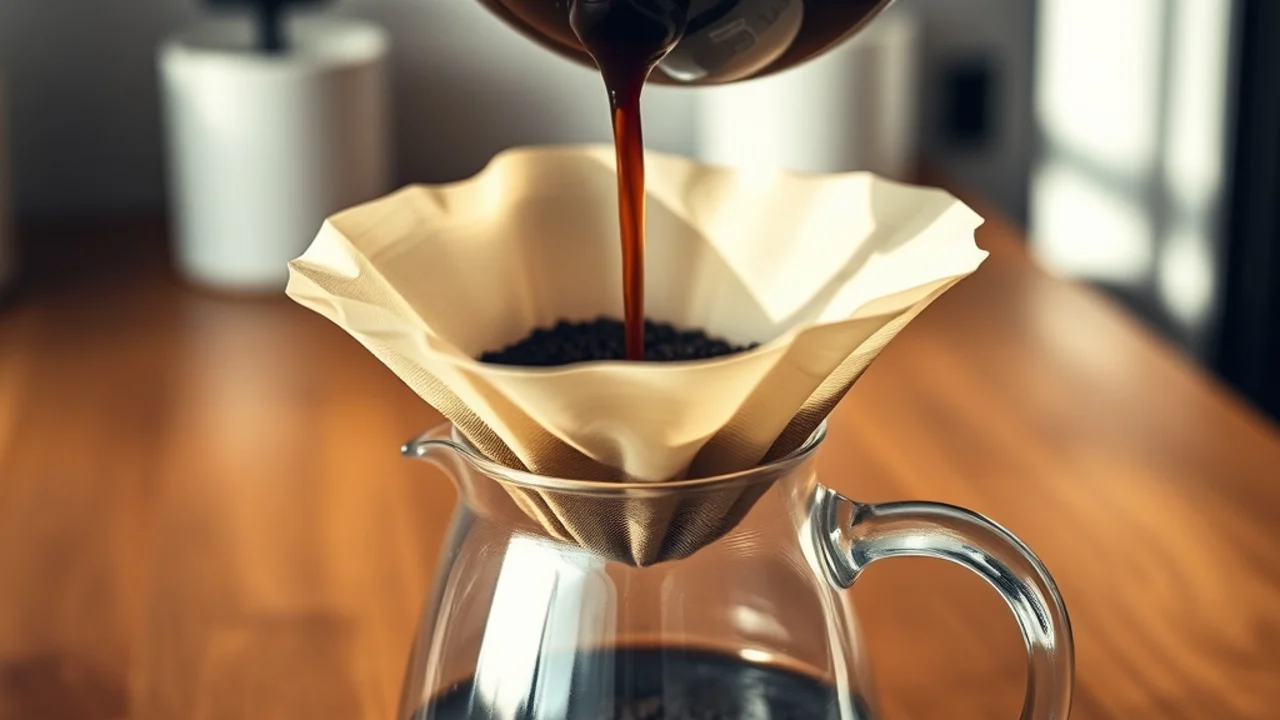
Pouring leftover hot coffee over ice creates a stale, watery drink because air oxidizes the coffee as it cools slowly. Flash-brewing (often called Japanese iced coffee) solves this by hot-brewing coffee at double strength directly onto measured ice cubes.
The hot water extracts aromatic oils instantly, while immediate contact with ice traps those delicate top notes before they evaporate. The ice melts into the calculated liquid total, leaving a crisp, chilled glass at ideal drinking strength.
For a single-serving alternative when short on time, a quick AeroPress iced coffee method yields a clean concentrate directly over ice in under three minutes.
Flash-Brew Recipe Proportions:
- 30 grams medium-coarse ground coffee.
- 250 grams boiling water (200°F).
- 250 grams solid ice cubes placed inside the receiving carafe.
Step-by-Step Instructions:
- Place 250 grams of ice directly into your glass pitcher or server.
- Set your pour-over cone over the pitcher and insert a rinsed paper filter with 30 grams of coffee grounds.
- Pour 250 grams of hot water in steady circular patterns over 3 minutes.
- As the hot coffee drips onto the ice, it cools instantly and reaches balanced strength. Stir once and pour over fresh ice.
If you do not have a kitchen scale to weigh ice, use a simple 1:1 volume split. Measure half your usual hot water amount for brewing, and place an equal volume of ice in the server below.
Storage, Shelf Life, and Food Safety Practices
Cold brew concentrate stays stable because low extraction temperatures limit chemical oxidation. Keep strained concentrate in a closed glass jar inside the refrigerator below 40°F (4°C). Undiluted concentrate holds sweet flavor for 7 to 10 days. Once mixed with water or dairy, drink the glass within 24 hours.
Steeping safety deserves attention during long batches. An evaluation of cold brew food safety notes that room-temperature steeping past 18 hours can encourage microbial activity if containers or water carry contamination. Steeping inside the refrigerator eliminates temperature risks entirely while maintaining control over flavor extraction.
Traditional hot-brewed iced coffee oxidizes far faster than cold brew. Acids degrade when exposed to air, causing flat, stale flavors after 24 to 48 hours in the fridge. Brew traditional flash-brewed iced coffee fresh for the cleanest flavor.
Frequently Asked Questions
Is cold brew stronger than regular iced coffee?
Un-diluted cold brew concentrate contains more caffeine per ounce than standard iced coffee due to its dense 1:4 steeping ratio. Once diluted 1:1 with water or milk, its caffeine content matches standard iced coffee.
Why does cold brew taste less acidic than hot coffee poured over ice?
Cold water does not dissolve heat-sensitive organic acids during steeping. Because titratable acids remain inside the grounds, cold brew presents a low perceived acidity with prominent chocolate and nut notes.
Can I make cold brew using regular pre-ground coffee?
Standard pre-ground coffee is ground fine for drip coffee makers, which can cause over-extraction and cloudy cold brew. Shorten your steeping duration to 8 to 10 hours in the fridge and filter twice through paper filters to prevent bitterness.
How long can you safely keep cold brew concentrate in the fridge?
Strained cold brew concentrate stays fresh in a sealed glass container stored at or below 40°F (4°C) for 7 to 10 days. Keep the concentrate undiluted until serving to preserve quality.
What is the best coffee roast for making cold brew at home?
Medium and dark roasts work exceptionally well for cold brew because long steeping highlights their natural dark cocoa and nutty flavors. Light roasts excel in hot flash-brewing, where heat extracts delicate citrus and floral notes.
For custom variations, adding vanilla extract, cinnamon sticks, or almond milk creates simple iced coffee flavor combinations tailored to your preferred level of sweetness.