
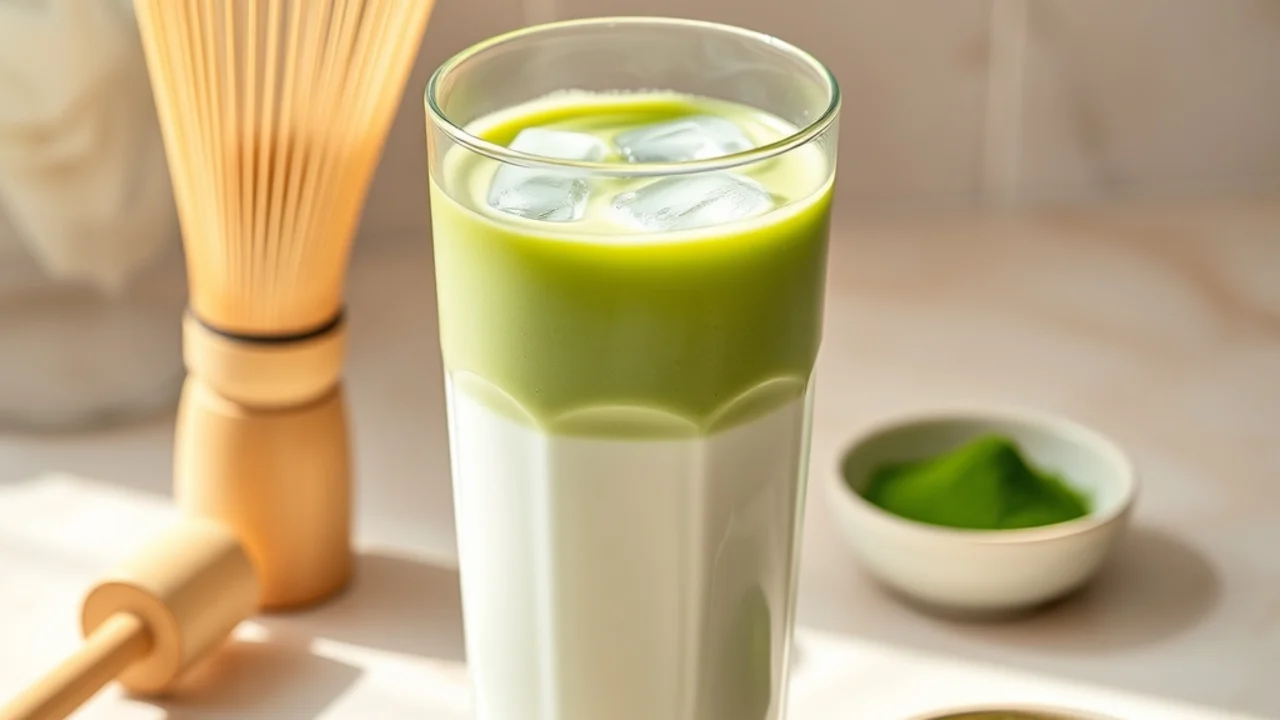
Few drinks are as visually striking or genuinely refreshing as a layered iced matcha latte. That vibrant green top layer swirling into cold, velvety milk looks like something straight off a coffee shop menu. Yet, making a cafe-quality version in your own kitchen takes just five minutes once you master a few fundamental steps.
If you have ever ended up with a chalky drink full of un-dissolved green clumps or a harsh, bitter flavor, you are not alone. The secret to a perfect iced matcha latte comes down to temperature control, proper whisking, and choosing the right sweetener. If you enjoy exploring different cold teas, you can also try other cool matcha drink recipes to expand your routine, but mastering this classic cold latte is the best place to start.
In This Article
- The Secret to a Smooth, Cafe-Quality Iced Matcha Latte
- Essential Ingredients & Smart Substitutions
- How to Make an Iced Matcha Latte Step-by-Step
- No Bamboo Whisk? 3 Easy Ways to Mix Matcha Without Lumps
- Delicious Flavor Variations: Starbucks Copycat & Beyond
- Frequently Asked Questions
- Final Tips for Mastering Homemade Matcha Drinks
The Secret to a Smooth, Cafe-Quality Iced Matcha Latte
Making an iced matcha latte at home is both cost-effective and completely customizable. Coffee shop drinks often contain pre-sweetened matcha powders or heavy syrups that mask the natural, earthy taste of green tea. When you prepare a diy iced matcha latte from scratch, you control the grade of tea, the level of sweetness, and the exact type of milk you prefer.
The key to achieving that smooth, velvety consistency without any stubborn powder floating on top lies in two crucial details: sifting the green tea powder and using warm, non-boiling water. Matcha is not an instant dissolve tea; it is a finely ground whole leaf powder suspended in liquid. Whisking it with water around 175°F (80°C) allows the powder to suspend fully while building a micro-foam top layer that blends smoothly into cold milk.
Essential Ingredients & Smart Substitutions
With only four basic components, the quality of each ingredient plays a noticeable role in your final drink.
- Matcha Powder: Ceremonial grade matcha yields a bright emerald green color and a naturally sweet, mellow flavor. High-grade culinary matcha works exceptionally well for lattes too, offering a slightly bolder green tea taste that cuts through creamy milk. Look for powder originating from Japan with a vivid green hue rather than a dull yellowish shade.
- Water Temperature: Use warm water heated to roughly 175°F (80°C). Boiling water will scorch the delicate green tea leaves, imparting a sharp, unpleasant bitterness to your drink. If you do not have a temperature-controlled kettle, boil water and let it sit uncovered for two to three minutes before using.
- Milk Selection: Barista-style oat milk is a favorite choice because its natural subtle sweetness and rich texture create gorgeous contrast with matcha. Whole milk offers classic richness, while unsweetened almond milk provides a lighter, nuttier profile. Readers seeking dietary adjustments for sensitivities might also enjoy a creamy AIP matcha latte for an allergen-friendly alternative.
- Sweetener: Simple syrup, agave nectar, maple syrup, or honey integrate seamlessly into liquid without settling at the bottom of an iced drink. Vanilla syrup is ideal if you prefer a classic cafe flavor profile.
How to Make an Iced Matcha Latte Step-by-Step
This quick matcha green tea latte recipe takes only five minutes from start to finish. Follow these detailed steps for a perfectly balanced cold drink.
| Prep Time | Cook Time | Total Time | Yield |
|---|---|---|---|
| 5 minutes | 0 minutes | 5 minutes | 1 serving |
Ingredients
- 1 to 1.5 teaspoons matcha powder (ceremonial or premium culinary grade)
- 2 ounces (1/4 cup) warm water (175°F / 80°C)
- 1 to 2 teaspoons simple syrup, honey, or maple syrup (adjust to taste)
- 3/4 cup (6 ounces) cold milk of choice (oat, almond, or whole milk)
- 1 cup ice cubes
Equipment
- Fine-mesh sifter
- Small bowl or measuring cup
- Traditional bamboo whisk (chasen) or hand-held electric milk frother
- Tall glass
Instructions
- Sift the Matcha: Place a small fine-mesh sifter over your bowl or measuring cup. Add 1 to 1.5 teaspoons of matcha powder and gently tap the side so the powder falls through into fine, loose particles. This removes compact lumps created during packaging.
- Add Warm Water: Pour 2 ounces of warm water (around 175°F / 80°C) directly over the sifted matcha.
- Whisk Until Frothy: Using a bamboo whisk, move your wrist in a brisk "W" or "M" shape rather than a circular motion. Whisk for 20 to 30 seconds until the powder is fully dissolved and a layer of bright green micro-foam forms on top. If using an electric handheld frother, submerge the whisk tip and froth for 15 seconds until smooth.
- Sweeten the Concentrate: Stir your liquid sweetener into the warm matcha shot so it dissolves evenly.
- Assemble the Latte: Fill a tall glass with fresh ice cubes. Pour 3/4 cup of cold milk into the glass, leaving about an inch of space at the top.
- Layer and Serve: Slowly pour the concentrated whisked matcha over the cold milk and ice. Watch the green and white layers swirl together. Stir before drinking with a straw.
No Bamboo Whisk? 3 Easy Ways to Mix Matcha Without Lumps
While a bamboo whisk (chasen) is the traditional tool designed specifically to suspend tea particles evenly without scratching ceramics, you do not need specialty equipment to learn how to make matcha latte iced at home. Here are three reliable alternative mixing methods:
- Electric Handheld Milk Frother: This small battery-powered tool is incredibly efficient. Sift your matcha into warm water, submerge the frother tip, and run it for 15 seconds. It creates an exceptional froth in seconds with virtually no effort.
- Mason Jar Shaker: Add sifted matcha, warm water, and your liquid sweetener into a small glass jar with a tight lid. Seal tightly and shake vigorously for 20 to 30 seconds. The agitation breaks up clumps effectively and creates a frothy foam layer.
- Small Wire Kitchen Whisk in a Wide Mug: If using a standard metal wire whisk, use a wide flat-bottomed mug rather than a narrow bowl. Whisk rapidly side-to-side in a zig-zag motion to incorporate air and dissolve the powder completely.
Delicious Flavor Variations: Starbucks Copycat & Beyond
Once you master the basic iced matcha tea latte recipe, customizing your drink with syrups and fruits brings endless variety to your home morning routine.
Iced Vanilla Matcha Latte (Starbucks Copycat)
To replicate the popular coffee house favorite, substitute the standard simple syrup with 1 to 2 tablespoons of pure vanilla syrup. For an even closer match, add a splash of vanilla extract into oat milk before pouring it over ice. You can also whip 2 tablespoons of heavy cream with 1 tablespoon of milk and a drop of vanilla syrup using a frother for 10 seconds to create a decadent vanilla sweet cold foam layer over your matcha.
Fruity & Refreshing Variations
Matcha pairs wonderfully with bright, fruity flavors. If you love layered beverages with visual appeal, try a layered iced mango matcha latte by layering sweet mango puree at the bottom of your glass beneath cold milk and green tea. On warm summer afternoons when you want something tangy without milk, an iced matcha lemonade provides crisp citrus notes alongside green tea freshness.
Frequently Asked Questions
Why does my iced matcha latte taste bitter?
Bitterness is usually caused by using boiling water, which scorches the tea leaves, or by using lower quality culinary grade matcha intended for baking rather than drinking. Using water around 175°F (80°C) and choosing a fresh ceremonial or high-grade matcha will produce a noticeably smooth, vegetable-sweet flavor profile.
Does an iced matcha tea latte have caffeine?
Yes. A single serving prepared with 1 teaspoon of matcha powder typically contains between 30 to 70 milligrams of caffeine, depending on the specific tea harvest. Matcha contains L-theanine, an amino acid that promotes calm alertness, providing sustained energy without the sudden crash or jitters often associated with coffee.
Can I make an iced matcha latte ahead of time?
You can whisk the matcha concentrate and store it in a sealed jar in the refrigerator for up to 24 hours. When ready to serve, shake the concentrate briskly to re-suspend any settled tea particles, then pour over fresh ice and cold milk. Avoid storing the drink with ice already added, as melting ice will dilute the flavor.
What is the best milk to use for an iced matcha latte?
Barista-edition oat milk is widely considered the best choice because its neutral creaminess complements the natural grassiness of green tea without overpowering it. Whole milk provides classic creaminess, while unsweetened almond milk offers a lighter option with lower calories.
Do I need boiling water to dissolve matcha powder?
No, you should strictly avoid boiling water. Boiling water burns matcha, producing a harsh, overly astringent taste. Warm water (175°F / 80°C) is ideal for dissolving the finely ground powder while preserving its delicate antioxidants and sweet vegetal notes.
Final Tips for Mastering Homemade Matcha Drinks
Making a smooth, cafe-style iced matcha green tea latte at home comes down to tiny details that take no extra effort once established as habit. Always take a few seconds to sift your powder, keep water warm rather than boiling, and adjust sweetness to match your taste preference.
Feel free to experiment with different plant-based milks and natural sweeteners like maple syrup or honey to discover your ideal daily glass. With a quick whisk and five minutes of prep, you can enjoy a fresh, vibrant green drink whenever you need a calm, steady energy boost.