
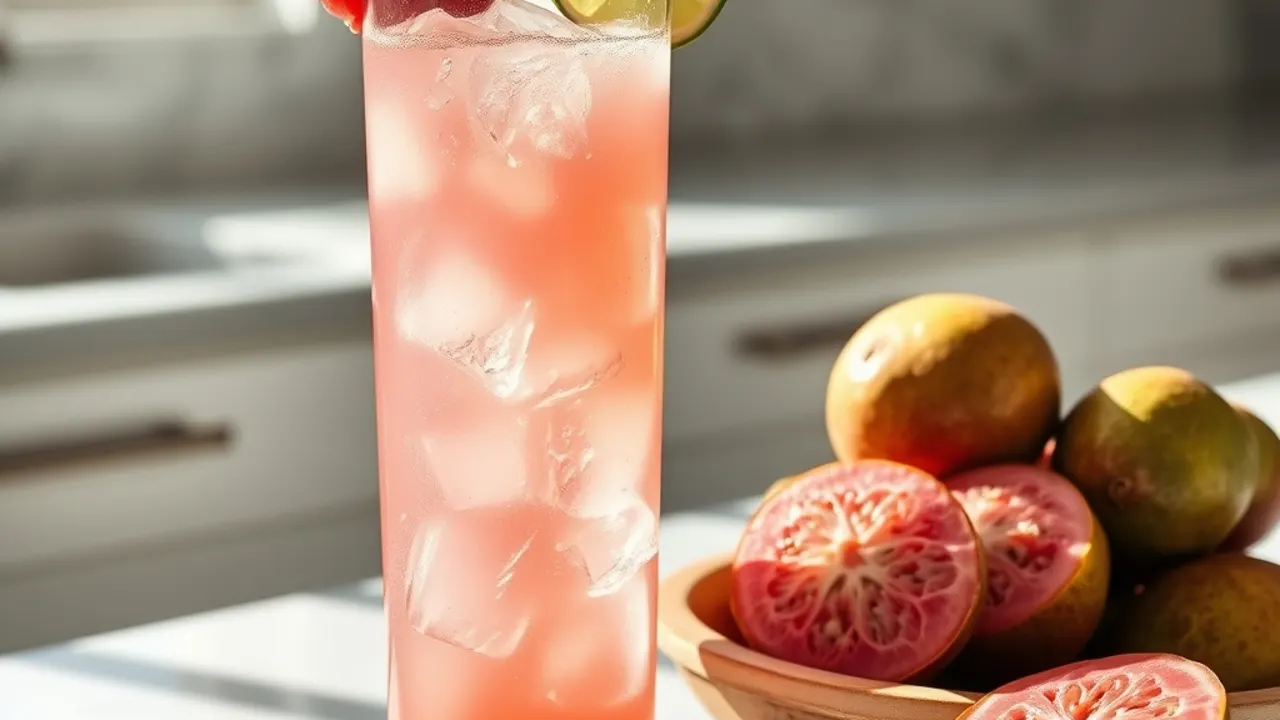
Looking for a vibrant, tropical drink that is both sweet and refreshing? This fresh guava juice recipe shows you how to turn ripe guavas into a silky, cafe-style drink in just ten minutes using basic kitchen tools.
To make fresh guava juice at home, wash and chop ripe pink or white guavas, blend them with cold water and a splash of lime juice on low speed for 30 to 45 seconds, and pour the puree through a fine mesh strainer to catch the hard seeds. Sweeten lightly to taste with honey or sugar, chill over ice, and enjoy immediately.
In This Article
- Why Make Fresh Guava Juice at Home?
- Ingredients and Tools You Need
- How to Make Guava Juice with Blender (Step-by-Step)
- How to Make Guava Juice by Boiling (Stovetop Method)
- Guava Juice Recipe with Milk (Creamy Variation)
- Guava Juice Fresh Benefits and Nutrition
- Storage and Bottle Freshness Tips
- Frequently Asked Questions
- Final Thoughts
Why Make Fresh Guava Juice at Home?
Store-bought tropical juices often contain corn syrup, preservatives, and artificial flavorings that hide the real fruit taste. When you prepare 100% guava juice in your own kitchen, you control the sugar, keep the bright fragrance intact, and protect all the delicate nutrients.
Guavas are naturally fragrant and yield a thick, velvety drink. Whether you prefer a lighter sip or a rich guava juice nectar, making it fresh lets you adjust the thickness simply by adding a splash more water. If you already enjoy our making guava juice at home guide or our vibrant fresh mango juice recipe, this version will quickly become a household staple.
Ingredients and Tools You Need
The beauty of the best guava juice recipe lies in its simplicity. You do not need fancy equipment or hard-to-find ingredients to get started.
- Fresh guavas: 4 medium ripe guavas (about 1 pound or 450 grams). Pink guavas give a gorgeous blush color, while white guavas yield a sweet, pale nectar. Look for fruit that yields gently to thumb pressure and gives off a sweet, floral aroma.
- Cold filtered water: 2 to 3 cups, depending on your preferred thickness.
- Fresh lime juice: 1 tablespoon to brighten the tropical flavor and balance the natural sweetness.
- Sweetener (optional): 1 to 2 tablespoons of honey, simple syrup, or raw cane sugar. Ripe guavas are naturally sweet, so taste before adding extra sugar.
- Equipment: A standard blender, a fine mesh strainer, a wooden spoon or spatula, and a glass pitcher.
How to Make Guava Juice with Blender (Step-by-Step)
Learning how to make guava juice with blender power is quick, but one key technique protects the flavor: do not crush the seeds. Guava seeds are extremely hard and can turn gritty or bitter if ground into dust.
- Wash and trim the fruit: Rinse the guavas under cold running water. Slice off the stem and bottom blossom ends. There is no need to peel the thin skin because it contains lots of flavor and softens easily. Cut the guavas into rough 1-inch chunks.
- Add to the blender: Place the chopped guavas into the blender jar along with 2 cups of cold water and the fresh lime juice.
- Pulse gently on low speed: Blend on low speed or pulse in short 5-second bursts for about 30 to 45 seconds. You want to separate the soft flesh from the seeds without grinding the hard seeds down. When the liquid looks thick and frothy, stop blending.
- Strain out the seeds: Set a fine mesh strainer over a large bowl or pitcher. Pour the blended mixture into the strainer. Use a spoon or spatula to press the puree through in a circular motion. The smooth pulp will flow into the pitcher, leaving the clean seeds behind in the mesh. Discard the seeds.
- Sweeten and adjust thickness: Taste your fresh juice. Stir in honey or sugar if needed. If the texture resembles a thick nectar and you want a lighter drink, stir in the remaining cup of cold water.
- Serve chilled: Pour over ice cubes in tall glasses and garnish with a fresh lime wheel.
How to Make Guava Juice by Boiling (Stovetop Method)
If your guavas are slightly firm or underripe, learning how to make guava juice by boiling provides an easy solution. Cooking softens stubborn fruit and brings out a deep, stewed aroma.
Place chopped guavas into a medium saucepan with 3 cups of water. Bring the water to a gentle boil over medium heat, then reduce the heat and simmer for 10 to 12 minutes until the guava chunks feel tender when poked with a fork. Let the mixture cool completely to room temperature. Once cooled, blend briefly on low speed and strain through your mesh sieve just like the blender method. This cooked method also creates an ideal base for punches, jelly, or mocktails.
Guava Juice Recipe with Milk (Creamy Variation)
In many parts of the Caribbean and Latin America, a guava juice recipe with milk (often called a guava batido or smoothie) is a beloved afternoon refreshment. The creamy milk softens the tropical tartness and creates a silky, milkshake-like texture.
To make this creamy treat, first strain your guava juice so it is completely seed-free. Pour 1 cup of the strained guava nectar back into your blender. Add 1 cup of cold whole milk (or canned evaporated milk for extra richness), 1 cup of crushed ice, and 1 tablespoon of condensed milk or sugar. Blend on high speed for 20 seconds until frothy and smooth. Serve right away before the milk and fruit acid separate.
Guava Juice Fresh Benefits and Nutrition
Adding this fruit drink to your routine delivers notable guava juice fresh benefits. Raw guava is famous for having significantly more vitamin C than oranges per serving, along with natural carotenoids and potassium.
According to USDA FoodData Central, 100 grams of raw guava provides over 200 milligrams of vitamin C, which helps support regular immune defenses and skin wellness. Clinical research summarized by the Harvard T.H. Chan School of Public Health highlights how vitamin C acts as a potent antioxidant, helping protect cells from daily oxidative stress.
When made without added sugar, guava juice calories remain naturally modest. One 8-ounce glass of pure homemade juice diluted with water contains roughly 60 to 75 calories. If you add two tablespoons of honey or cane sugar across the pitcher, each serving averages about 100 to 115 calories, making it a wholesome addition to our roundup of the best juices to drink in the morning.
| Feature | Fresh Homemade Juice | Bottled Supermarket Juice |
|---|---|---|
| Ingredients | Whole guavas, water, lime juice | Reconstituted concentrate, corn syrup, flavorings |
| Sugar Content | Customizable (low or none) | Usually 25g+ added sugar per cup |
| Texture | Silky, authentic fruit nectar | Thin or gum-thickened |
| Vitamin Preservation | High active raw nutrients | Reduced through high-heat processing |
Storage and Bottle Freshness Tips
Because this recipe contains no artificial preservatives, keep your freshly pressed juice chilled. Transfer the strained liquid into a clean glass guava juice bottle or a tightly sealed mason jar, leaving about an inch of empty space at the top.
- Refrigeration: Store the sealed bottle in the coldest section of your refrigerator for up to 3 to 4 days. Natural separation is completely normal; simply shake the bottle before pouring.
- Freezing: Pour extra juice into silicone ice cube trays and freeze until solid. Transfer the cubes to a freezer-safe zip bag for up to 3 months. Drop two or three guava cubes into sparkling water, iced tea, or a morning blend alongside our easy homemade pineapple juice.
- Prevent browning: That single tablespoon of fresh lime juice acts as a natural antioxidant, keeping pink guava juice vivid and bright in the fridge.
Frequently Asked Questions
Do I need to peel guavas before blending?
No, you do not need to peel ripe guavas. The outer rind is thin, edible, and softens easily during blending. Just wash the skin thoroughly and trim away the stem and bottom blossom end.
Can I use frozen guava for this recipe?
Yes, frozen guava chunks work wonderfully. Thaw them in the refrigerator for an hour so they blend easily, or blend them straight from frozen with warm water to make an instant guava slushie.
Why does my guava juice taste gritty?
A gritty texture happens if your blender speed was set too high or run too long, breaking the hard seeds into tiny fragments. Always pulse on low speed for under 45 seconds and use a fine mesh sieve to catch every seed.
Which guavas make the best juice: pink or white?
Both types taste delicious. Pink guavas have a slightly more floral aroma and create an attractive coral-pink color, while white guavas tend to taste a bit sweeter with a milder acidity.
Final Thoughts
Mastering this simple fresh guava juice recipe brings tropical flavor right to your breakfast table or weekend brunch. With just fresh fruit, cool water, and a quick spin in your blender, you can enjoy a velvety, nutrient-packed drink anytime. Pour yourself a chilled glass today, or combine it with tropical fruits like mango and pineapple for your own signature house blend!


