
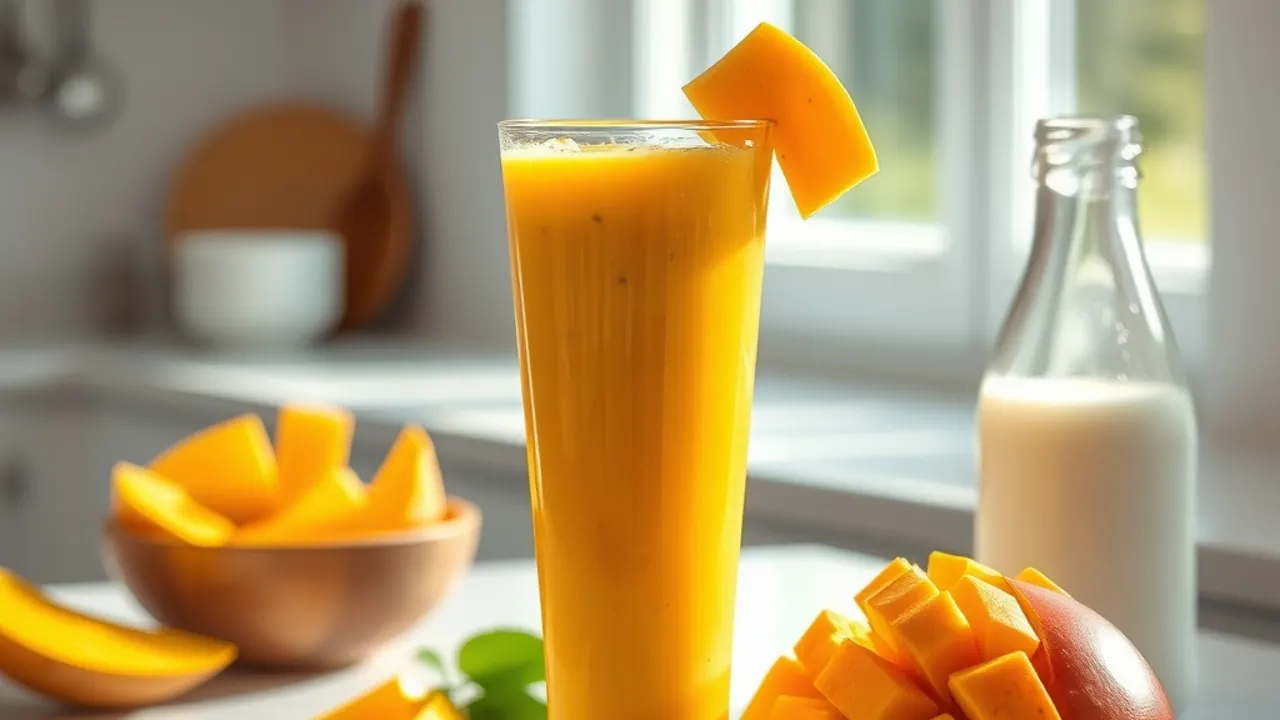
A high protein mango smoothie is a quick, refreshing drink made by blending frozen sweet mango chunks with a concentrated protein source like Greek yogurt, protein powder, or cottage cheese, along with your choice of milk. It delivers over 25 grams of satisfying protein in under five minutes, giving you a tropical, creamy meal or post-workout refresher without any complicated prep work.
Whether you need a fast breakfast before heading out the door or a nourishing post-workout drink, this vibrant blend hits the spot. The natural sweetness of juicy mango pairs smoothly with creamy textures, creating a treat that tastes like a dessert while supporting your daily energy and fitness goals.
In This Article
Why You Will Love This Recipe
Many fruit smoothies leave you hungry an hour later because they rely mostly on quick-digesting sugars. Adding a high-quality protein foundation slows down digestion and keeps you full and energized throughout a busy morning.
According to nutritional guidelines from the Harvard T.H. Chan School of Public Health, consuming adequate protein supports muscle maintenance, satiety, and metabolic function. Combining protein with vitamin-rich mangoes means you get essential antioxidants, fiber, and vibrant flavor in every sip.
Best of all, you do not need fancy equipment. A standard home blender and a few wholesome ingredients will give you a cafe-style drink at home in minutes. If you enjoy wholesome blends, exploring a balanced smoothie meal replacement is an easy way to streamline your weekly meal prep.
Key Ingredients and Substitutions
Making a satisfying smoothie starts with balancing flavor and nutrition. Here is what you need:
- Frozen Mango Chunks: Frozen fruit creates a thick, milkshake-like texture without needing crushed ice, which can water down the fruit flavor. Mangoes are naturally loaded with vitamin C and vitamin A, as documented by the USDA FoodData Central.
- Protein Source: A scoop of unflavored or vanilla whey, soy, or pea protein powder provides an easy 20 to 25 grams of protein. If you want a mango protein smoothie without protein powder, plain nonfat Greek yogurt or low-fat cottage cheese work exceptionally well.
- Liquid Base: Unsweetened almond milk, oat milk, or dairy milk help the blender spin smoothly. Use about 3/4 to 1 cup depending on how thick you like your drink.
- Optional Flavor Enhancers: A splash of pure vanilla extract, a pinch of ground cinnamon, or a teaspoon of chia seeds add subtle aroma and healthy omega-3 fats.
For readers who enjoy combining rich produce with tropical fruits, blending in a wedge of creamy avocado, as seen in our avocado mango smoothie blend, brings extra creaminess and heart-healthy fats.
How to Make It Step-by-Step
Blending the perfect smoothie comes down to the order you place ingredients into your blender jar. Follow these simple steps for a silky, lump-free drink:
- Pour the Liquid First: Add your milk to the bottom of the blender. Placing liquid closest to the blades keeps powders and frozen chunks from getting trapped underneath.
- Add Soft Ingredients and Powders: Spoon in your Greek yogurt, protein powder, or seeds. If you are using a standard mango vanilla protein smoothie combination, dropping the vanilla powder directly onto the milk ensures smooth mixing.
- Top with Frozen Mango: Add 1.5 cups of frozen mango pieces right on top. Their weight will naturally push the ingredients down toward the spinning blades.
- Blend on Low, Then High: Start blending on low speed for 15 seconds to break up the frozen chunks. Increase the speed to high for 45 to 60 seconds until the mixture is completely creamy and velvety.
- Adjust and Serve: Check the thickness. If it is too thick to drink comfortably, pour in two tablespoons of extra milk and pulse for 5 seconds. Pour into a tall glass and enjoy immediately.
Flavor Variations and Dietary Twists
One of the best parts about making smoothies at home is tailoring the ingredients to your dietary preferences and daily fitness needs.
Mango Protein Smoothie Recipes No Banana
Many traditional fruit smoothies rely heavily on ripe bananas for thickness, but banana flavor can easily overpower subtle tropical fruits. Because frozen mango naturally blends into a lush, thick puree, you can easily make mango protein smoothie recipes no banana required. Simply use frozen mango as your primary thickener, paired with Greek yogurt or silken tofu for structure.
Mango Protein Smoothie Without Yogurt
If you avoid dairy or dislike tangy flavors, making a mango protein smoothie without yogurt is simple. Use a plant-based milk like oat or almond milk alongside your favorite plant-based vanilla protein powder. Adding a tablespoon of hemp hearts or ground flaxseed restores the rich mouthfeel you would normally get from yogurt.
Mango Chocolate Protein Smoothie
While tropical fruit and chocolate may sound unexpected, dark cocoa complements the bright sweetness of ripe fruit beautifully. To prepare a mango chocolate protein smoothie, swap vanilla powder for chocolate protein powder, or stir in one tablespoon of unsweetened Dutch-process cocoa powder. It tastes like a chocolate-dipped frozen fruit pop.
Mango Protein Shake Bodybuilding Option
Athletes aiming to build muscle often require higher caloric density and extra carbohydrates post-workout. For a robust mango protein shake bodybuilding blend, use whole dairy milk or soy milk, add two full scoops of protein powder, and blend in 1/4 cup of rolled oats or two tablespoons of natural peanut butter. For more inspiration on post-workout drinks, check out our guide to thick banana protein shakes.
Mango Protein Smoothie Calories and Nutrition
Understanding mango protein smoothie calories helps you fit this satisfying beverage into your specific routine. A standard single-serving batch made with frozen mango, unsweetened almond milk, and one scoop of whey protein powder generally delivers:
- Calories: Approximately 260 to 310 calories
- Protein: 25 to 28 grams
- Carbohydrates: 35 to 40 grams (including about 5 grams of natural dietary fiber)
- Fat: 2 to 4 grams
If your goal is a mango protein smoothie weight loss strategy, keeping the liquid base unsweetened and skipping added honeys or syrups keeps calories moderate while delivering high satiety. The combination of dietary fiber and lean protein keeps blood sugar levels more stable compared to fruit juices alone. You can also explore our creamy Greek yogurt smoothie recipe to see how simple dairy additions alter overall protein density.
Pro Tips for the Best Texture
A few practical blender tricks ensure smooth results every single time:
- Skip the Ice Cubes: Plain ice cubes dilute the sweet mango flavor and create a slushy, separated texture after sitting for a few minutes. Always choose pre-frozen fruit chunks instead.
- Use Ripe Fruit for Freezing: If you freeze your own mangoes, wait until the fruit yields slightly to a gentle squeeze and smells fragrant. Freezing underripe mango results in a sour, chalky drink.
- Combine with Other Tropical Fruits: For extra brightness, mix in frozen pineapple chunks. You can read our tips on using frozen mango and pineapple for optimal fruit pairing.
- Scrape the Sides: If protein powder clings to the walls of the blender container, pause after 20 seconds, scrape down the interior with a silicone spatula, and blend again.
Frequently Asked Questions
Can I use fresh mango instead of frozen?
Yes, fresh mango blends smoothly and tastes delicious. However, because fresh fruit contains more free liquid, your smoothie will turn out thinner. To restore thickness, add 1/2 cup of ice cubes or freeze your sliced mango for at least two hours before blending.
What is the best protein powder to use with mango?
Vanilla whey protein or unflavored plant-based protein powder (such as pea or soy) work best. The warm notes of vanilla elevate the fruit sweetness without clashing. Some brands also make specialized fruit-flavored powders, such as a mango protein powder, which further boosts the tropical taste.
How can I make this smoothie completely dairy-free?
Substitute dairy milk with unsweetened oat milk, coconut milk, or almond milk. In place of whey powder or dairy yogurt, use a plant-based vanilla protein powder or unsweetened coconut-milk yogurt.
Can I prepare this drink the night before?
Smoothies are freshest right out of the blender, but you can store leftovers in an airtight glass jar in the refrigerator for up to 24 hours. Give the jar a vigorous shake before drinking, as natural separation may occur over time.
Printable Recipe Card
Keep this straightforward recipe handy for quick morning blends or post-workout recovery.
Creamy High Protein Mango Smoothie
Prep Time: 5 minutes | Total Time: 5 minutes | Yield: 1 large serving
Ingredients:
- 1.5 cups frozen mango chunks
- 1 scoop vanilla protein powder (or 3/4 cup plain Greek yogurt)
- 3/4 cup unsweetened almond milk (or milk of choice)
- 1/2 teaspoon pure vanilla extract
- 1 tablespoon chia seeds or ground flaxseed (optional)
Instructions:
- Pour the almond milk and vanilla extract into the blender container.
- Add the protein powder (or Greek yogurt) and optional chia seeds.
- Top with the frozen mango chunks.
- Cover tightly and blend on low for 15 seconds, then increase to high for 45 to 60 seconds until rich, creamy, and uniform.
- Pour into a glass and serve cold.
Blending a nutritious high protein mango smoothie takes just minutes and gives your body the energizing fuel it needs to tackle the day. Try this simple base recipe tomorrow morning, customize it with your favorite toppings or seeds, and enjoy a vibrant tropical treat whenever hunger strikes.


