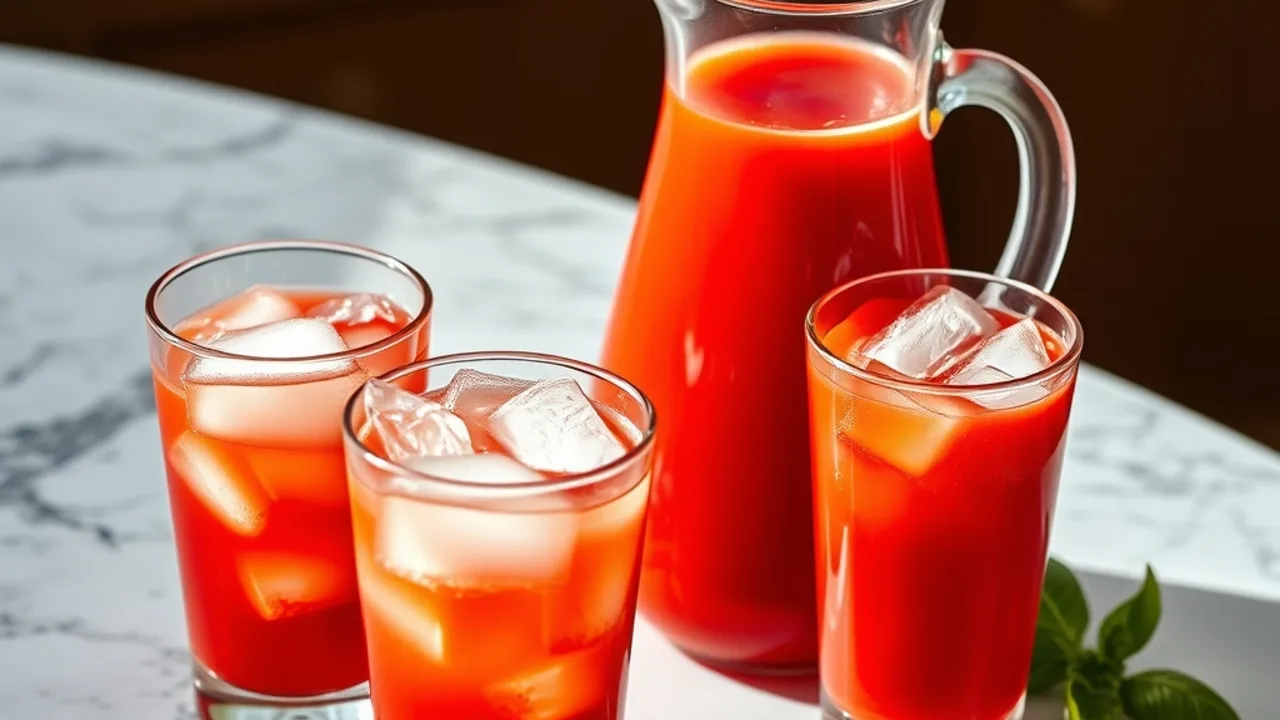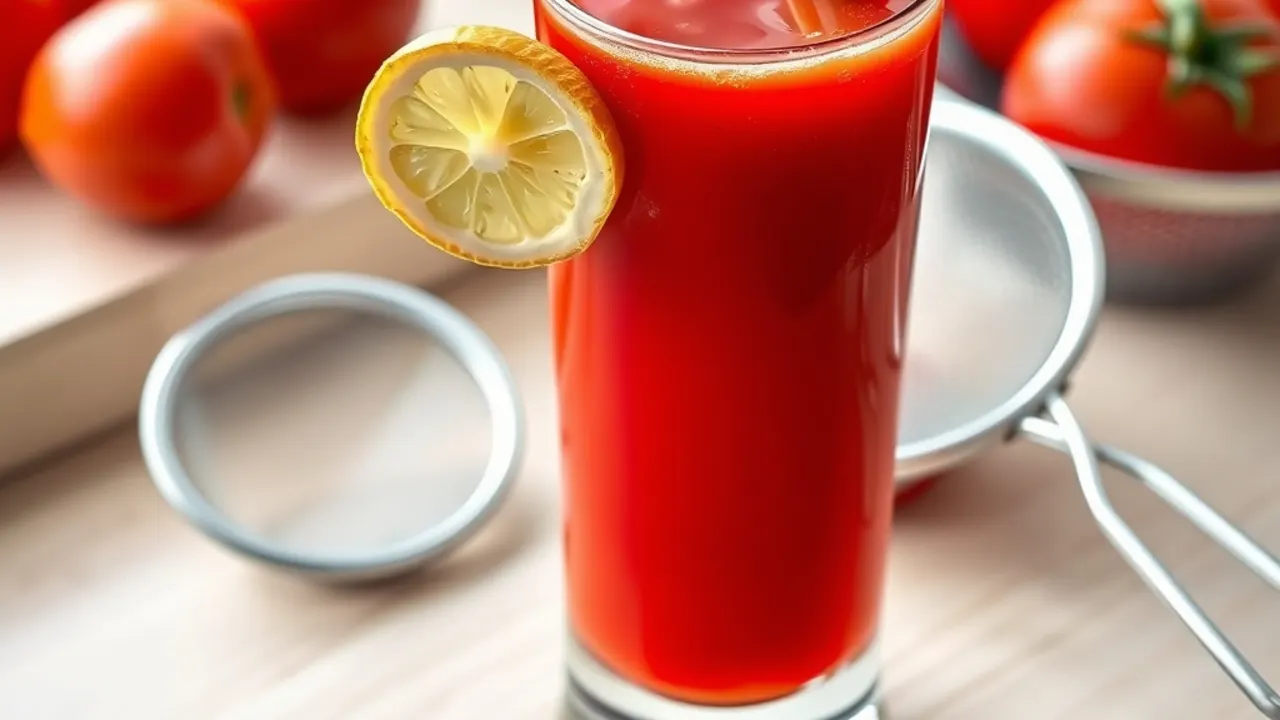
Store-bought tomato juice often carries a flat, tinny aftertaste from high-heat processing and metallic cans. Making it at home delivers a bright, naturally sweet drink with clean garden flavor. You do not need a commercial juicer, a hand-cranked food mill, or hours of blanching and peeling to get smooth results.
The easiest way to make tomato juice relies on a high-speed blender, a short ten-minute simmer, and a fine-mesh strainer. Chopping whole tomatoes and running them through a sieve removes seeds and skin fragments effortlessly, dropping preparation time down to twenty minutes total.
In This Article
- Why the Blender Method Is the Easiest Way to Make Tomato Juice
- Choosing the Best Fresh Tomatoes for Juice
- How to Make Fresh Tomato Juice in a Blender (Step-by-Step)
- Instant Pantry Shortcut: Making Tomato Juice from Tomato Paste
- How to Season and Customize Your Tomato Juice
- Storing and Freezing Homemade Tomato Juice
- Frequently Asked Questions
Why the Blender Method Is the Easiest Way to Make Tomato Juice
Traditional canning guides often instruct home cooks to drop tomatoes into boiling water, plunge them into ice baths, pull off the loosened skins, and cut out the seeds by hand. That workflow creates stack of dirty dishes and takes up an entire afternoon. Heavy electric juicers present their own drawbacks, often bogging down under soft tomato pulp and requiring tedious cleanup around wire screens.
Using a standard countertop blender paired with a stainless steel fine-mesh sieve eliminates these intermediate hurdles. High-speed blades break down tomato skins and pulp into a uniform liquid within seconds. Pouring that liquid through a mesh sieve catches remaining skin flecks and seeds automatically. You clean one pitcher and one strainer, leaving your kitchen clean and saving prep energy.
Choosing the Best Fresh Tomatoes for Juice
Flavor and body come down to fruit selection. Ripe tomatoes with deep red flesh yield a vibrant drink with balanced natural sugars and acidity.
- Plum Varieties (Roma or San Marzano): These varieties contain denser flesh and lower water content. They form the velvety structure of the juice, preventing it from tasting thin or watery.
- Slicing Varieties (Beefsteak or Heirloom): Large beefsteak tomatoes contribute heavy liquid volume and soft sweetness. Pairing equal parts Roma and beefsteak yields balanced body and yield.
Avoid pale, firm, out-of-season tomatoes from cold storage. Underripe tomatoes lack natural sugars, resulting in a dull, excessively tart drink with a yellowish tint.
How to Make Fresh Tomato Juice in a Blender (Step-by-Step)
This method takes twenty minutes from knife to pitcher, yielding roughly one quart of smooth juice.
Yield: 4 servings (1 quart)
Prep time: 10 minutes
Cook time: 10 minutes
Total time: 20 minutes
Equipment:
- High-speed blender
- Medium saucepan
- Fine-mesh strainer or sieve
- Ladle or flexible silicone spatula
- Glass pitcher or storage jar
Ingredients:
- 3 pounds fresh ripe tomatoes (mix of Roma and Beefsteak), washed and cored
- 1/2 teaspoon fine sea salt
- 1 tablespoon fresh lemon juice
- 1/4 teaspoon celery salt or a pinch of granulated sugar (optional)
Instructions:
- Core the tomatoes to remove tough stem attachments. Cut them into coarse quarters. Do not peel or remove seeds.
- Place chopped tomatoes into the medium saucepan. Cover and set over medium heat for eight to ten minutes, stirring twice, until the fruit softens, collapses, and releases abundant liquid.
- Transfer the hot tomatoes and all accumulated liquid into the blender container. Secure the lid tightly, leaving the center cap slightly vented to let steam escape. Cover the top loosely with a clean kitchen towel.
- Puree on high speed for 45 to 60 seconds until completely smooth.
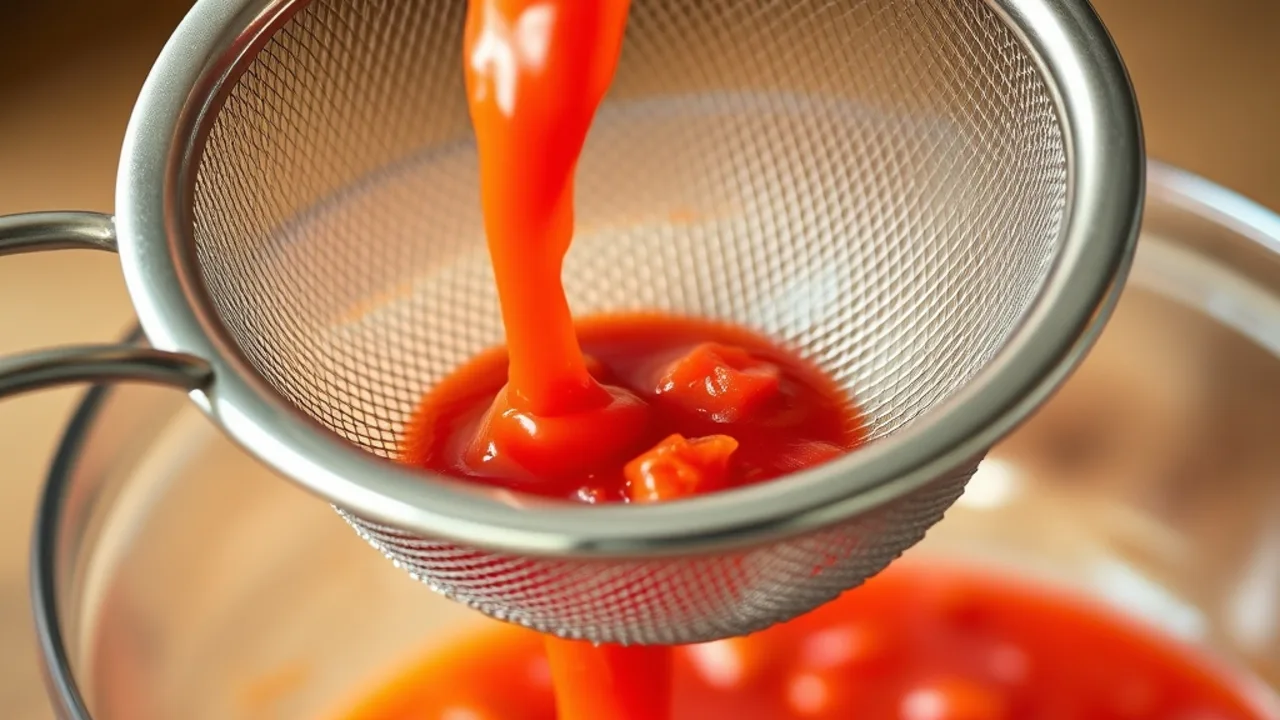
- Set a fine-mesh strainer over a bowl or glass pitcher. Pour the warm puree into the strainer. Use a ladle or silicone spatula to press the liquid through using gentle circular motions. Stop when only dry seeds and thick skin pulp remain in the basket.
- Whisk sea salt and fresh lemon juice directly into the strained juice. Taste and add celery salt or a pinch of sugar if desired.
- Chill in the refrigerator for two hours before serving over ice.
Why a Quick Simmer Prevents Juice Separation
If you blend raw tomatoes and pour the liquid straight into a glass, it will separate into a clear watery layer at the bottom and a floating pink foam layer at the top within fifteen minutes. This separation occurs due to natural enzymes within raw tomatoes, specifically pectin methyl esterase.
These enzymes break down pectins as soon as cell walls rupture during blending. Heating chopped tomatoes to at least 180 degrees Fahrenheit before blending deactivates these enzymes permanently. Guidance from the Purdue University Extension tomato processing standards confirms that brief heating keeps solids suspended, holding a cohesive texture throughout refrigeration.
Straining for a Smooth, Silky Texture
Straining separates coarse material without forcing you to scrape skins by hand. Avoid pressing pulp through the wire mesh with heavy force. Excessive pressure pushes gritty skin particles through the openings, clouding the liquid.
Let gravity do most of the work. Stir the mixture lightly in the center of the sieve to keep liquid moving through the mesh. Discard the concentrated seed sediment left behind in the strainer basket.
Instant Pantry Shortcut: Making Tomato Juice from Tomato Paste
If fresh garden tomatoes are out of season, canned tomato paste offers a two-minute shortcut. Quality paste consists of double-concentrated cooked tomatoes, providing rich color and thick body without raw enzyme separation issues.
Whisk together one 6-ounce can of tomato paste and 3 cups of cold filtered water in a mixing pitcher. Add 1/2 teaspoon of sea salt and 1 teaspoon of fresh lemon juice. Stir vigorously for thirty seconds until the paste dissolves completely into a smooth liquid.
If you prefer a lighter consistency, add an extra half cup of water. If the juice tastes flat, adjust with an extra pinch of salt and two drops of apple cider vinegar. This pantry version serves as a reliable cooking base for soups and chili when fresh produce is unavailable.
How to Season and Customize Your Tomato Juice
Unseasoned tomato juice tastes flat because tomatoes need sodium and acid to highlight their natural sweetness. Fresh lemon juice provides bright acidity that cuts through heavy vegetable notes. Skip bottled lemon juice here; fresh juice delivers clean citrus aromatics without artificial preservative notes.
If you are mixing a batch for brunch cocktails, customize the base right in the pitcher:
- Bloody Mary Base: Add 1/2 teaspoon of Worcestershire sauce, 1/4 teaspoon of prepared horseradish, three dashes of hot sauce, and 1/4 teaspoon of coarse black pepper per pint of juice.
- Herbal Flavor: Toss three fresh basil leaves or a sprig of oregano into the blender container with warm simmered tomatoes before pureeing.
- Savory Depth: Blend in two tablespoons of clear pickle brine or dill weed juice to enhance savory complexity.
Storing and Freezing Homemade Tomato Juice
Keep fresh juice stored in an airtight glass mason jar or pitcher in the refrigerator. Consume it within seven days. Stir gently before serving, as minor settling can occur over prolonged cold storage.
For longer preservation, freeze the liquid in rigid food-safe containers or heavy-duty freezer bags, leaving one inch of headspace for liquid expansion. According to food safety research from the University of California Division of Agriculture and Natural Resources, frozen tomato products maintain peak quality and flavor for up to twelve months when stored at zero degrees Fahrenheit.
This simple blender-and-refrigeration method is intended for short-term cold storage or freezing. If you plan to preserve tomato juice in sealed glass jars at room temperature, follow tested water-bath canning protocols. As detailed by Michigan State University Extension home preservation guidelines, home-canned tomato juice requires explicit acidification using bottled lemon juice or citric acid before processing to prevent bacterial growth safely.
Frequently Asked Questions
What is the easiest way to make tomato juice without a juicer?
The easiest way is blending chopped whole tomatoes after a ten-minute simmer and passing the liquid through a fine-mesh strainer. This approach requires no specialty juicing equipment, takes twenty minutes, and eliminates peeling.
Do I need to peel tomatoes before blending them for juice?
Peeling is unnecessary. High-speed blender blades liquefy skins easily, and pouring the mixture through a fine strainer catches remaining skin fragments without manual peeling.
Why did my homemade tomato juice separate into water and pulp?
Separation happens when raw tomato enzymes break down pectin structures after blending. Heating chopped tomatoes for eight to ten minutes before blending deactivates these enzymes, holding a smooth texture.
Can I make tomato juice using tomato paste instead of fresh tomatoes?
Yes. Whisk one 6-ounce can of tomato paste with 3 cups of cold water, 1/2 teaspoon of salt, and 1 teaspoon of lemon juice for a quick two-minute juice.
How long does fresh homemade tomato juice last in the refrigerator?
Stored in a sealed glass container in the refrigerator, fresh juice keeps well for up to seven days.
Can I safely store this homemade tomato juice in the freezer?
Yes. Freeze juice in freezer-safe containers with an inch of expansion headspace for up to twelve months. Thaw frozen containers in the refrigerator overnight before drinking.
Pour chilled tomato juice over double-frozen ice cubes in a heavy glass, garnished with a crisp celery stalk and a cracked black pepper border.