
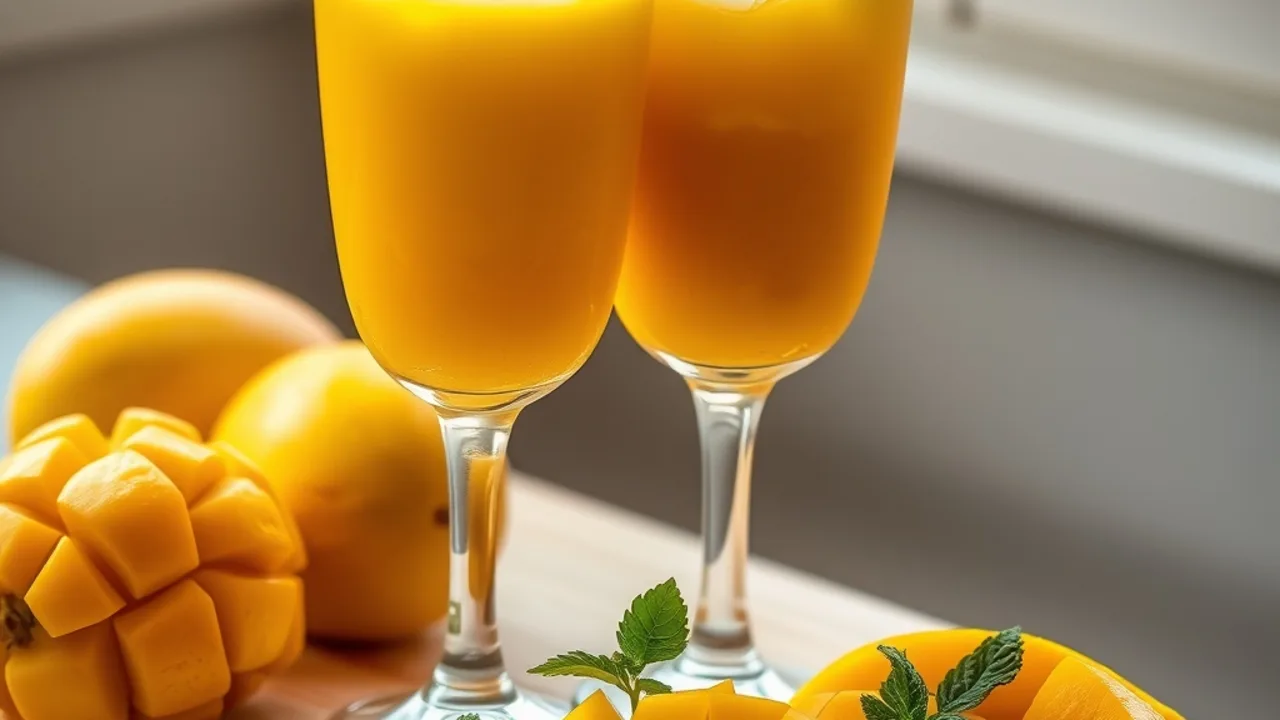
Making a vibrant fresh mango juice recipe at home takes just 5 minutes and a simple blender. To make it, blend fresh ripe mango chunks with cold water, a squeeze of fresh lime juice to brighten the flavor, and a touch of honey if your fruit needs extra sweetness. Strain it for a silky sip or pour it straight over ice for a thick, velvety drink.
Instead of searching for "fresh mango juice near me" at specialty juice bars, you can prepare this pure, additive-free drink right on your kitchen counter. It is rich, naturally sweet, and far more flavorful than any store-bought bottle.
In This Article
Mango Juice Description: Taste and Texture
If you have never made it from scratch, a good mango juice description comes down to two words: sweet and luscious. Authentic homemade mango nectar has an intense tropical aroma and a silky, nectar-like body. Unlike clear fruit juices such as apple or grape, fresh mango juice carries tiny particles of blended fruit pulp, giving it body and a bright golden-orange color.
The flavor is sunny, rich, and tropical, balanced by just enough natural tanginess. If you enjoy bright tropical drinks like our making guava juice at home guide or homemade easy homemade pineapple juice recipe, you will appreciate how smooth and velvety pure mango feels on the palate.
Ingredients for Mango Juice
You only need a handful of everyday items to prepare the best mango juice. Keeping the recipe simple lets the natural fruit shine.
- Ripe Mangoes: 2 large ripe mangoes (about 3 cups diced). Varieties such as Ataulfo (honey mango), Alphonso, Kent, or Tommy Atkins work well. Choose mangoes that give slightly when pressed gently and smell fragrant at the stem.
- Cold Water or Coconut Water: 1 to 1.5 cups, depending on your preferred thickness. Chilled water creates a clean finish, while coconut water adds mild sweetness and electrolytes.
- Fresh Lime Juice: 1 tablespoon. A tiny splash of acid balances the rich sugars of the fruit and keeps the color vibrant.
- Optional Sweetener: 1 to 2 teaspoons of honey, agave nectar, or simple syrup. Perfectly ripe seasonal fruit rarely needs added sugar, so taste your mango before sweetening.
- Ice Cubes: For serving immediately in tall glasses.
Step-by-Step Instructions
Here is how to turn ripe fruit into smooth, homemade juice in minutes:
- Peel and Slice: Stand each mango upright on a cutting board. Cut down along both sides of the flat inner seed to remove the two thick fruit halves (the "cheeks"). Score the flesh into cubes without cutting through the skin, then scoop the fruit into your blender with a large spoon. Trim any remaining fruit around the seed.
- Blend until Smooth: Add the diced fruit, 1 cup of cold water, and the fresh lime juice to your blender jar. Secure the lid and blend on high speed for 45 to 60 seconds until the mixture is completely smooth and puree-like.
- Check the Consistency: Stop the machine and stir. If you prefer a lighter, thinner drink, pour in an additional 1/4 to 1/2 cup of cold water and pulse for 5 seconds.
- Strain (Optional): If your mangoes had fibrous threads, pour the liquid through a fine-mesh strainer over a glass pitcher, using the back of a spoon to press the juice through. For smooth varieties like Ataulfo, you can skip straining entirely to keep the healthy fruit fiber.
- Serve: Fill two glasses with ice cubes, pour your fresh juice over the top, and enjoy cold.
Mango Juice Benefits
Drinking fruit pure mango juice offers more than just tropical flavor. According to data from the USDA FoodData Central, mangos are naturally rich in essential micronutrients like vitamin C and vitamin A (in the form of beta-carotene). Vitamin C supports immune function and collagen synthesis, while beta-carotene supports vision and skin health.
Key mango juice benefits include:
- Hydration Support: Mangos are naturally packed with water and potassium, helping replenish fluids after workouts or warm afternoons.
- Antioxidant Rich: Fresh mangos contain plant compounds such as mangiferin, catechins, and anthocyanins that protect cells from oxidative stress.
- Gentle Digestion: Mangos supply natural enzymes called amylases, which help break down complex carbohydrates smoothly.
To explore more nutritious morning sips, check out our roundup of the best juices to drink in the morning.
What to Mix with Mango Juice: Fun Flavor Pairings
Wondering what to mix with mango juice when you want to change things up? Because mango has a bold, sweet profile, it blends seamlessly with tart juices, spices, and sparkling liquids.
- Citrus Splash: Stir in 2 tablespoons of fresh orange juice or passion fruit pulp for an extra punch of bright acidity.
- Fresh Mint & Ginger: Blend a thin coin of peeled ginger or a few fresh mint leaves directly into the blender with the fruit.
- Sparkling Spritzer: Fill a glass halfway with mango nectar and top it off with chilled club soda or sparkling mineral water for an effortless mocktail.
- Creamy Smoothies: Combine mango nectar with plain yogurt or avocado for a velvety texture, just like our avocado smoothie mango recipe.
Making Mango Juice for Small Businesses
If you are exploring how to make mango juice for business, such as a cafe, food truck, or farmers market stand, consistency and food hygiene are essential. Preparing juice at scale requires more attention to pulp ratios, sanitation, and shelf life than making a single glass at home.
Small-scale food operators often consult a commercial mango juice processing pdf from university extension services or the Food and Agriculture Organization (FAO) for technical guidelines on pasteurization temperatures, Brix testing (measuring natural sugar content), and hot-fill bottling methods. For standard shelf stability without artificial preservatives, batch thermal pasteurization (heating juice to around 160°F to 165°F for 15 to 30 seconds before rapid chilling) is a standard method used to control spoilage organisms.
How Long Does Fresh Mango Juice Last in the Fridge?
How long does fresh mango juice last in the fridge? When stored in an airtight glass container, unpasteurized homemade mango juice stays fresh for 2 to 3 days. Because this drink contains no artificial preservatives, natural enzymatic browning and separation can begin after 48 hours.
To maximize freshness:
- Store the juice in a clean glass bottle or mason jar filled close to the rim to reduce air exposure.
- Always keep it chilled at or below 40°F (4°C).
- Give the container a gentle shake before pouring, as natural pulp settles over time.
- Can you freeze it? Yes. Pour the juice into freezer-safe containers or silicone ice cube trays, leaving an inch of headspace for expansion. Frozen mango juice stays flavorful for up to 3 months.
Frequently Asked Questions
Can I use frozen mango for this recipe?
Yes. Thaw frozen mango chunks in the refrigerator for about 30 minutes before blending, or blend them straight from frozen with a little extra liquid for an ultra-frosty, slushie-style drink.
Do I need to strain the mango juice?
Straining is completely optional. If your fruit is stringy, pouring it through a fine-mesh sieve gives a silky texture. If you use smooth varieties like Ataulfo or Honey mangos, you can leave the pulp in for extra fiber.
Why is my mango juice too thick?
Mangos contain high levels of pectin and dense pulp. If your juice feels too thick, simply stir in an extra splash of cold water, sparkling water, or coconut water until it reaches your desired consistency.
Can I make mango juice without a blender?
If you do not have an electric blender, mash very ripe, soft mangoes thoroughly with a potato masher or fork. Whisk the pulp with water and lime juice, then press the liquid firmly through a fine sieve to separate the juice from the heavy fibers.
Final Thoughts
Mastering this simple fresh mango juice recipe gives you an easy, natural treat whenever sweet mangos are in season. It is refreshing, customizable, and ready in five minutes flat. Pour yourself a chilled glass today, or explore our collection of the best homemade juice recipes for more fresh fruit inspiration.


