
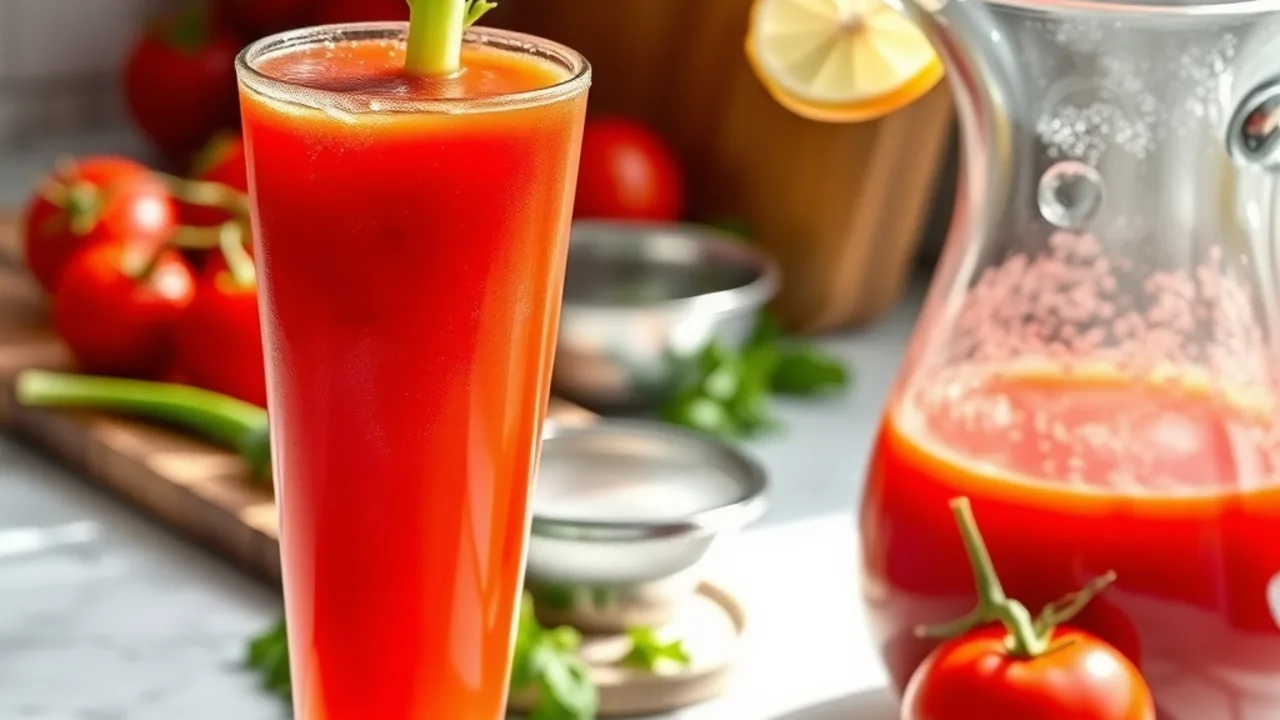
A fresh homemade tomato juice recipe is one of the most rewarding drinks you can prepare in your kitchen. Making your own batch lets you skip excess sodium and artificial additives while enjoying the crisp, vibrant taste of real garden tomatoes.
To make homemade tomato juice quickly, chop three pounds of ripe tomatoes and simmer them in a saucepan for 15 to 20 minutes until soft. Puree the softened tomatoes in a blender until smooth, strain the mixture through a fine-mesh sieve to remove seeds and skins, and chill before serving.
In This Article
- Why Make Fresh Tomato Juice at Home?
- Ingredients for Old Fashioned Tomato Juice
- How to Make Tomato Juice in a Blender (Step-by-Step)
- How to Make Tomato Juice with a Juicer
- Pantry Shortcuts: Canned Tomatoes, Paste, and Sauce
- Flavor Twists: Bloody Mary Mix and Wellness Blends
- Storage and Freshness Tips
- Homemade Tomato Juice Recipe Card
- Frequently Asked Questions
- Final Thoughts
Why Make Fresh Tomato Juice at Home?
Store-bought cans often hide surprisingly high levels of salt and preservatives. When you make an authentic, healthy drink recipe with fresh produce, you control every single pinch of seasoning. You can keep it light, spice it up, or leave it completely unsalted.
Tomatoes are naturally rich in essential nutrients like vitamin C, potassium, and lycopene. According to the USDA FoodData Central database, fresh red tomatoes provide natural hydration with very few calories. Enjoying a glass in the morning feels refreshing, energizing, and restorative.
Ingredients for Old Fashioned Tomato Juice
A classic, old fashioned tomato juice relies on simple produce and basic pantry seasonings. You do not need artificial flavor packets or complex equipment to achieve fantastic flavor.
- Fresh Ripe Tomatoes (3 pounds): Roma, plum, or vine-ripened tomatoes provide a dense texture and balanced sweetness.
- Celery Stalk (1 stalk, chopped): Adds subtle herbal depth and balances the acidity.
- Fresh Lemon Juice (1 tablespoon): Brightens the overall flavor and helps preserve natural color.
- Sea Salt (1/2 teaspoon): Enhances the natural savory sweetness of the fruit.
- Black Pepper (1/8 teaspoon, optional): Gives a mild, pleasant warmth.
- Honey or Sugar (1/2 teaspoon, optional): Helps round out tart batches without making the juice taste sugary.
How to Make Tomato Juice in a Blender (Step-by-Step)
Learning how to make tomato juice in a blender is easy, even if you have never made fresh juice before. Using a gentle stovetop simmer before pureeing breaks down the tough pectin, creating a velvety consistency that does not separate quickly in the glass.
- Wash and Core: Rinse three pounds of tomatoes under cool running water. Cut out the stem cores and chop the fruit into rough wedges.
- Simmer to Soften: Place the chopped tomatoes and one chopped celery stalk into a deep stainless steel pot. Cover and cook over medium-low heat for roughly 15 to 20 minutes, stirring occasionally until completely soft and soupy.
- Puree Smooth: Let the mixture cool for 5 minutes so it is safe to handle. Transfer the softened tomatoes to your blender jar and secure the lid. Run on high speed for 60 seconds until completely liquified. This is the simplest way to understand how to make homemade tomato juice with a blender without needing specialized kitchen appliances.
- Strain Out Solids: Pour the liquid through a fine-mesh sieve or food mill set over a large pitcher. Use the back of a ladle to press through the velvety juice while leaving behind seeds and skin fragments.
- Season and Chill: Stir in the lemon juice, salt, and optional sweetener. Chill in the refrigerator for at least 2 hours before serving over ice.
How to Make Tomato Juice with a Juicer
If you prefer an unheated, raw beverage, learning how to make tomato juice with a juicer takes only a few minutes. Juicers instantly separate pulp and seeds, yielding a bright, light-bodied glass packed with fresh enzymes.
Simply wash your tomatoes, cut them to fit your juicer chute, and feed them through on a low setting. Add a quarter of a peeled lemon to help preserve color. While raw cold-pressed juice tends to separate faster than cooked juice, a quick stir brings it right back together. For more morning inspiration, explore our list of the best juices to drink in the morning.
Pantry Shortcuts: Canned Tomatoes, Paste, and Sauce
What if fresh tomatoes are out of season? You can still whip up a delicious glass right from your pantry shelves using basic staples.
How to Make Tomato Juice from Canned Tomatoes
Knowing how to make tomato juice from canned tomatoes is a lifesaver during winter months. Choose a 28-ounce can of whole peeled San Marzano or plum tomatoes with no added herbs. Blend the tomatoes with their packing juice, 1/2 cup of cold water, a splash of lemon juice, and a pinch of salt until smooth, then strain through a fine mesh.
How to Make Tomato Juice from Tomato Paste
Wondering how to make tomato juice from tomato paste when you run low on supplies? Whisk 1/2 cup of standard canned tomato paste with 2 cups of cold filtered water. Stir in 1/4 teaspoon of salt, a dash of lemon juice, and a pinch of sugar. The result is surprisingly rich, balanced, and ready in 60 seconds.
How to Make Tomato Juice from Tomato Sauce
If you only have plain tomato sauce in your cupboard, learning how to make tomato juice from tomato sauce is equally simple. Combine equal parts plain unseasoned tomato sauce and cold water (such as 1 cup sauce to 1 cup water). Stir thoroughly, chill, and adjust with a dash of cracked black pepper or lime juice.
Flavor Twists: Bloody Mary Mix and Wellness Blends
Fresh juice makes a versatile base for everything from savory weekend drinks to daily wellness tonics.
If you enjoy morning mocktails, mixing a custom homemade tomato juice for bloody mary bases gives you restaurant-quality depth. Stir in a dash of Worcestershire sauce, hot pepper sauce, prepared horseradish, celery salt, and freshly cracked black pepper. Pour it over ice and garnish with celery, olives, and pickled peppers for a crowd-pleasing alcohol-free refresher.
Many people also look into how to make tomato juice for skin wellness. Tomatoes contain antioxidant compounds that support overall skin hydration when enjoyed as part of a balanced diet. Blend fresh tomatoes with cucumber, a peeled carrot, and a slice of fresh ginger root for a revitalizing sip. You can discover more tonic ideas in our guide to ginger lemon water.
Storage and Freshness Tips
Freshly strained homemade juice contains no chemical stabilizers, so proper handling keeps every glass crisp and flavorful.
- Refrigeration: Keep your juice in an airtight glass pitcher or mason jar for 3 to 5 days. Shake well before pouring, as natural settling is normal.
- Freezing: Pour cooled juice into freezer-safe jars, leaving 1 inch of headspace for expansion. Freeze for up to 6 months and thaw overnight in the fridge.
- Safe Home Canning: If you plan to can your juice for pantry storage, remember that tomatoes require added acid (such as bottled lemon juice or citric acid) to prevent spoilage. Follow the tested home canning guidelines from the National Center for Home Food Preservation to ensure safe processing.
Homemade Tomato Juice Recipe Card
Use this handy recipe summary to prepare your juice with ease.
| Detail | Information |
|---|---|
| Prep Time | 10 minutes |
| Cook Time | 20 minutes |
| Total Time | 30 minutes (plus chilling) |
| Yield | About 4 cups (4 servings) |
| Primary Equipment | Saucepan, blender, fine-mesh sieve |
Frequently Asked Questions
Which tomatoes make the best homemade juice?
Plum and Roma tomatoes are ideal because they have thick walls, rich flavor, and fewer watery seed pockets. You can also mix in beefsteak or heirloom varieties for a sweeter, more complex flavor profile.
Do I have to peel tomatoes before making juice?
No, peeling is unnecessary if you strain the juice through a fine-mesh sieve after blending. Simmering tenderizes the skins so all the juices and colors are released before the solids are removed.
Why does my fresh tomato juice separate in the fridge?
Natural tomato juice does not contain commercial emulsifiers, meaning the lighter water and heavier pulp naturally separate over time. Simply stir or shake the container before serving.
Can I make this juice without cooking it?
Yes, you can blend raw chopped tomatoes directly with a splash of water and strain them through a fine sieve. Cooked juice offers a deeper flavor and silkier texture, while raw juice delivers a crisp, garden-fresh profile.
Final Thoughts
Mastering this simple homemade tomato juice recipe gives you full control over flavor, salt, and freshness with zero artificial preservatives. Whether you enjoy it over ice on a warm morning, build an incredible mocktail, or store extra jars for later, nothing compares to the taste of real fruit. If you enjoy making healthy kitchen staples from scratch, explore our roundups of the best homemade juice recipes and safe homemade clamato juice to expand your beverage collection.


