
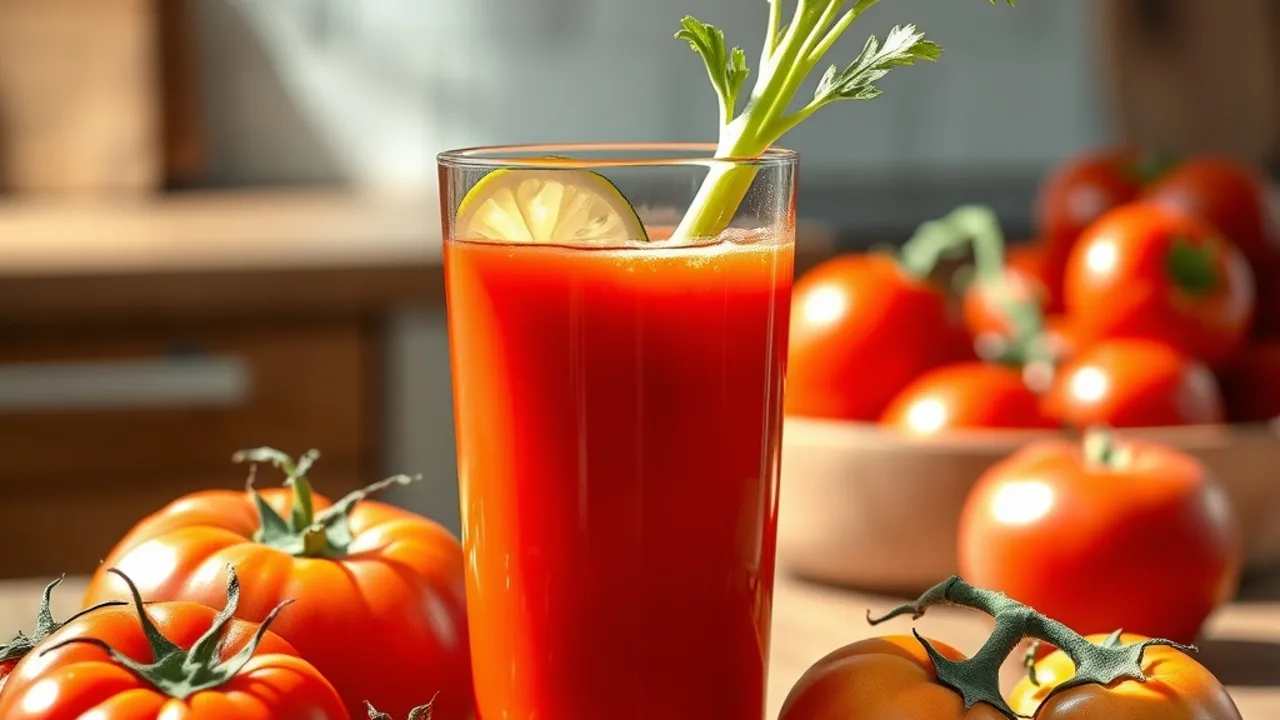
When you want to make fresh tomato juice at home, all you need are ripe garden tomatoes, a pinch of salt, and a blender or juicer. Making your own juice gives you a bright, clean flavor that tastes completely different from store-bought cans. It takes only about 15 minutes from vine to glass, with no artificial preservatives or excess sodium.
Quick Answer: To make fresh tomato juice quickly, wash and chop 3 pounds of ripe tomatoes, simmer them in a pot for 10 to 12 minutes until soft, blend until smooth, and press through a fine-mesh strainer to remove seeds and skins. Season with a pinch of salt and lemon juice, then chill and serve.
In This Article
- Why Make Fresh Tomato Juice at Home?
- The Best Tomatoes for Juicing
- Ingredients and Kitchen Tools
- How to Make Tomato Juice in a Blender
- How to Make Tomato Juice with a Juicer
- Old Fashioned Tomato Juice and Amish Style Variations
- Homemade Tomato Juice for Bloody Mary Drinks
- Pantry Shortcuts: Canned Tomatoes and Tomato Sauce
- How to Make Tomato Juice for Skin Care
- Storage and Pressure Canning Tomato Juice
- Frequently Asked Questions
- Summary and Next Sips
Why Make Fresh Tomato Juice at Home?
Store-bought tomato juice often contains high amounts of sodium and added flavorings. When you prepare it yourself, you control every single ingredient. You can keep it as a crisp, healthy tomato juice recipe by using simple seasoning, or turn it into a savory brunch mixer.
Tomatoes are packed with water, vitamin C, potassium, and lycopene. According to nutritional data from the USDA FoodData Central, raw ripe tomatoes provide natural hydration alongside essential antioxidants. Sipping a glass in the morning feels revitalizing and pairs wonderfully alongside other wholesome choices from our collection of the best juices to drink in the morning.
The Best Tomatoes for Juicing
The secret to great juice starts with the fruit. You want tomatoes that are deeply colored, fragrant, and heavy for their size. Soft, fully ripe tomatoes yield the sweetest, smoothest beverage.
- Roma or Plum Tomatoes: These have thick flesh and fewer seeds, producing a rich, velvety texture.
- Beefsteak Tomatoes: Very juicy with a mild flavor, making them great to blend with meatier varieties.
- Campari or Vine Ripe: Naturally sweet with balanced acidity, ideal if you like a sweeter morning drink.
- Heirloom Tomatoes: Offer complex, earthy flavors and fun colors, though yellow or green heirlooms will yield a different color juice.
Ingredients and Kitchen Tools
You do not need expensive kitchen gear to get started. Here is what you need for a standard batch yielding about 4 cups of juice:
- Fresh Tomatoes: 3 pounds (about 6 to 8 medium tomatoes), cored and roughly chopped.
- Lemon Juice: 1 tablespoon of fresh lemon juice to brighten the flavor and balance the natural sugars.
- Fine Sea Salt: 1/2 teaspoon, adjusted to your personal taste.
- Black Pepper: A light pinch (optional).
- Celery or Onion (Optional): 1 chopped stalk of celery adds classic savory depth.
For equipment, have ready a chef knife, cutting board, medium saucepan, blender or juicer, and a fine-mesh sieve or nut milk bag.
How to Make Tomato Juice in a Blender
Learning how to make tomato juice in a blender is the most accessible method because almost every kitchen has one. Cooking the tomatoes briefly before blending breaks down pectin, which prevents the juice from separating quickly in your glass.
- Simmer the Tomatoes: Place chopped tomatoes and celery (if using) into a large saucepan over medium heat. Cover and simmer for 10 to 12 minutes until soft and soupy. Stir occasionally so nothing sticks.
- Cool Slightly: Remove the pot from heat and let the mixture sit for 5 minutes so it is safe to transfer.
- Blend: Pour the softened tomatoes into your blender. Secure the lid tightly with the center cap vented to allow steam to escape. Blend on high speed for 60 to 90 seconds until completely smooth.
- Strain: Set a fine-mesh strainer over a glass pitcher. Pour the blended liquid through, pressing gently with the back of a spoon to extract every drop while leaving seeds and coarse skin behind.
- Season and Chill: Stir in lemon juice, salt, and pepper. Place the pitcher in the refrigerator for at least 1 hour before serving over ice.
If you enjoy simple blender beverages, you can also explore our companion guide on a homemade tomato juice recipe for additional step-by-step pointers.
How to Make Tomato Juice with a Juicer
If you own an electric machine, discovering how to make tomato juice with a juicer gives you a crisp, completely raw juice in minutes without turning on the stove.
- Prep the Fruit: Wash your tomatoes thoroughly under cool water. Cut them into halves or wedges that easily fit through your juicer chute.
- Run the Machine: Turn on your centrifugal or masticating juicer. Slowly feed the tomato wedges through the chute, using the tamper to guide them down.
- Add Herbs or Greens: Push a small rib of celery or a sprig of fresh parsley through the juicer between tomatoes to add subtle savory notes.
- Stir and Season: The juicer separates the pulp automatically. Stir lemon juice and a pinch of salt directly into the collection pitcher. Chill thoroughly before enjoying.
Raw juiced tomatoes tend to have a lighter, fresher taste than cooked versions. For more whole-fruit ideas, check out our roundup of best homemade juice recipes.
Old Fashioned Tomato Juice and Amish Style Variations
Traditional kitchen recipes often include comforting seasoning twists. Classic old fashioned tomato juice is gently simmered with diced sweet onion, celery leaves, and a whole bay leaf before straining. This gives the beverage a rich, savory backbone reminiscent of country cooking.
An authentic amish tomato juice recipe takes that comfort a step further by balancing natural acidity with a touch of sweetness. Amish cooks often stir in 1 to 2 tablespoons of brown sugar or granulated sugar per quart, alongside a dash of Worcestershire sauce and celery salt. The result is a smooth, sweet-and-tangy beverage that tastes incredible served ice-cold alongside breakfast eggs.
Homemade Tomato Juice for Bloody Mary Drinks
Nothing elevates a weekend brunch like homemade tomato juice for bloody mary cocktails or mocktails. Commercial cocktail mixers are often thick and heavily salted, but homemade juice creates a vibrant drink that lets premium garnishes shine.
To prep your base for cocktails, add these ingredients directly to 2 cups of your freshly strained tomato juice:
- 1 tablespoon prepared horseradish
- 1 teaspoon Worcestershire sauce
- 1/2 teaspoon hot pepper sauce (such as Tabasco)
- 1/4 teaspoon freshly ground black pepper
- 1/2 teaspoon celery salt
- Juice of half a lime
Whisk everything together and chill. Pour over fresh ice cubes, add your favorite spirit or sparkling water for a virgin sip, and garnish with celery stalks, olives, and pickled peppers. For readers who enjoy savory party drinks, pairing this with ideas from our guide to canning homemade clamato juice creates endless brunch possibilities.
Pantry Shortcuts: Canned Tomatoes and Tomato Sauce
What if you crave a glass of red juice in the middle of winter when fresh tomatoes taste bland? You can easily make quick substitutes using staple pantry goods.
How to Make Tomato Juice from Canned Tomatoes
Knowing how to make tomato juice from canned tomatoes is a lifesaver. Grab a 28-ounce can of whole peeled San Marzano or plum tomatoes packed in juice. Dump the entire can into your blender, add 1/3 cup of cool filtered water, 1 teaspoon of lemon juice, and a pinch of salt. Blend on high for 60 seconds, then strain through a fine mesh sieve. It produces a rich juice with bright acidity in under 3 minutes.
How to Make Tomato Juice from Tomato Sauce
If you only have plain canned sauce, learning how to make tomato juice from tomato sauce is just as simple. Mix equal parts plain tomato sauce (no added Italian seasonings) and cold water. For example, combine one 8-ounce can of plain tomato sauce with 1 cup of cold water. Whisk in 1/2 teaspoon of lemon juice and a dash of black pepper. The flavor is slightly cooked, but it works wonderfully in soups, marinades, or quick cooking applications.
How to Make Tomato Juice for Skin Care
Many people search for how to make tomato juice for skin care routines. Tomatoes contain natural fruit acids and antioxidants like vitamin C that help tone oily skin and gently tighten appearance when used in homemade face masks.
To prepare a batch for topical skin care, simply grate or blend one fresh, washed tomato without adding any salt, pepper, or lemon juice. Strain the clear pulp and juice through cheesecloth. You can apply the fresh juice to clean skin with a cotton ball, leave it on for 10 minutes, and rinse with lukewarm water. Always perform a small patch test on your arm first to ensure your skin is not sensitive to natural tomato acidity.
Storage and Pressure Canning Tomato Juice
Freshly pressed tomato juice will keep well in a sealed glass mason jar in your refrigerator for up to 4 days. Because homemade juice has no chemical stabilizers, natural separation will occur. Simply give the jar a gentle shake before pouring.
For long-term pantry storage, you must follow verified canning rules. The National Center for Home Food Preservation notes that because tomato acidity varies by variety, home canners must add bottled lemon juice or citric acid to jars before processing to prevent bacterial growth. While boiling water bath canning is common for acidified tomato juice, pressure canning tomato juice is also an approved option that allows consistent processing times across elevations. Always consult tested canning manuals for exact poundage, headspace, and timing for your equipment.
Frequently Asked Questions
Do I need to peel tomatoes before juicing them?
No, you do not need to peel them beforehand. If you use a blender, simmering the tomatoes whole and pressing them through a fine-mesh strainer catches all skins and seeds effortlessly. If you use a juicer, the machine automatically ejects the skins.
Why does my homemade tomato juice separate?
Natural tomato juice separates because water and vegetable solids naturally divide without industrial emulsifiers. Simmering your tomatoes briefly before blending helps set the pectins, but giving the chilled bottle a quick shake before pouring solves separation completely.
Can I freeze fresh tomato juice?
Yes, fresh tomato juice freezes very well. Pour strained juice into freezer-safe containers, leaving at least 1 inch of headspace at the top for liquid expansion. It stays fresh in the freezer for up to 6 months.
Is raw tomato juice better than cooked tomato juice?
Both methods offer great benefits. Raw juiced tomatoes provide a lighter, brighter flavor with intact heat-sensitive nutrients. Cooked tomato juice releases more bioavailable lycopene and has a thicker, classic mouthfeel that holds together longer in the glass.
Summary and Next Sips
It takes only minimal effort to make fresh tomato juice that tastes rich, refreshing, and clean. Whether you simmer a batch for an authentic Amish-style morning glass, mix a fiery homemade Bloody Mary, or blend canned tomatoes for a fast weeknight solution, homemade juice beats store-bought cartons every time.
You might also like exploring our step-by-step tutorial on making fresh and easy homemade tomato juice, or discovering delicious wellness ideas in our overview of top healthy drinks for daily energy.


