
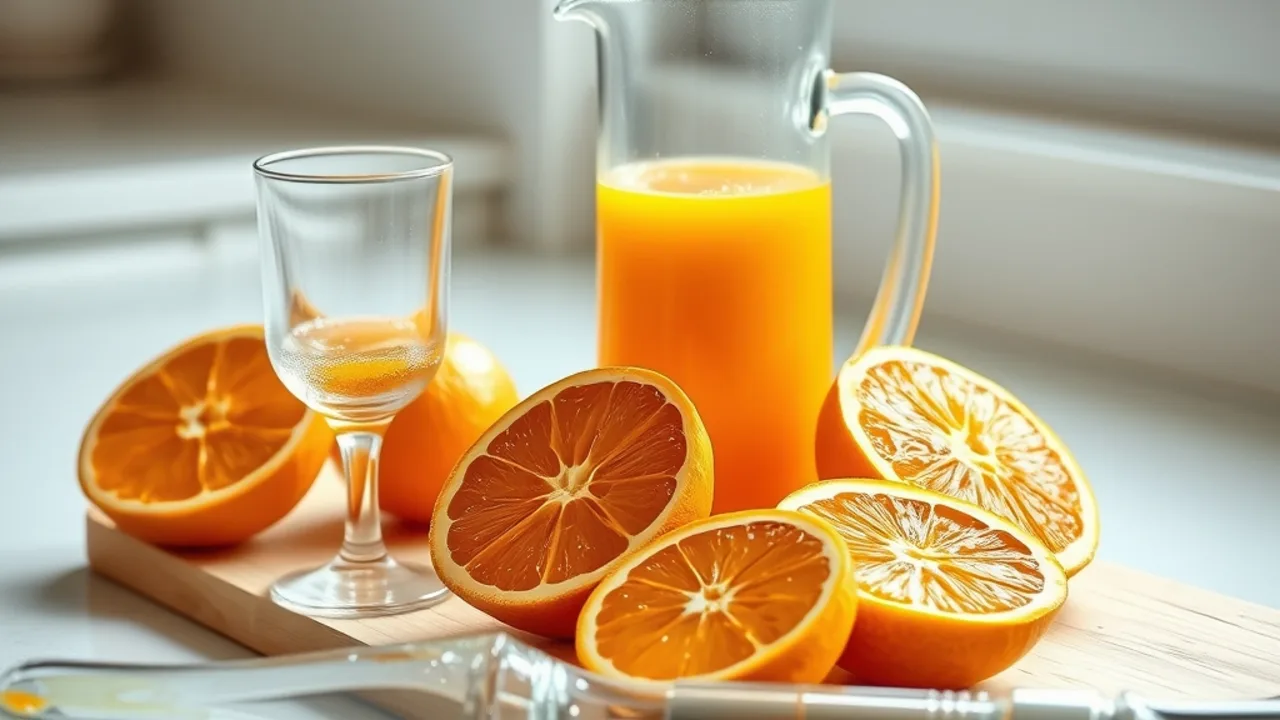
When you pour a glass in the morning, you might wonder what real orange juice ingredients actually are. In its purest, authentic form, real orange juice contains just one single ingredient: 100% freshly squeezed oranges.
However, commercial cartons at the grocery store tell a slightly different story. Depending on whether you buy freshly squeezed juice, not-from-concentrate cartons, or reconstituted frozen concentrate, the label may list additional components such as natural flavor packs, citric acid, pulp, or added vitamins like ascorbic acid (vitamin C) and calcium.
In This Article
- What Are the Ingredients in Real Orange Juice?
- How to Read Store-Bought Orange Juice Labels
- The Role of Flavor Packs in Commercial Juice
- The Best Oranges for 100% Real Juice
- How to Make Real Orange Juice at Home
- Fresh vs Store-Bought Juice Comparison
- Storage and Freshness Tips
- Frequently Asked Questions
- Delicious Ways to Enjoy Pure Juice
What Are the Ingredients in Real Orange Juice?
If you pick an orange off a tree, slice it in half, and squeeze it into a glass, your ingredient list is completely simple. It consists of pure orange juice liquid and naturally occurring citrus pulp.
According to the standard definitions set by the U.S. Food and Drug Administration (FDA), commercial juice labeled as pasteurized orange juice must be obtained from mature oranges of the species Citrus sinensis. While that standard protects consumers from adulterated products, commercial manufacturing involves processing steps that change what ends up inside the carton.
For a similar breakdown of how commercial fruit beverages differ from homemade drinks, check out our guide on real mango juice ingredients and packaged labels.
How to Read Store-Bought Orange Juice Labels
When shopping in the refrigerated aisle, cartons carry several different terms. Understanding these designations helps you know exactly what is going into your body.
- 100% Pure Squeezed (Not from Concentrate): This juice is pressed directly from fresh oranges, pasteurized to kill harmful microbes, and chilled. It contains no added water, but it often undergoes deaeration (removing oxygen) for long-term storage in large holding tanks.
- Orange Juice from Concentrate: Fresh juice is filtered and heated to evaporate about 80% of its water content, creating a thick, sticky syrup. Bottlers later rehydrate this concentrate with filtered water before packaging.
- Fortified Orange Juice: Many brands add nutrients such as tricalcium phosphate or calcium lactate (calcium) and ergocalciferol (vitamin D) to boost the micronutrient profile.
- Orange Drink or Orange Beverage: Be careful with these labels. If a container says "drink", "beverage", or "cocktail", it usually contains only 5% to 15% real fruit juice, combined with high fructose corn syrup, artificial colors, and water.
The Role of Flavor Packs in Commercial Juice
Have you ever noticed that a specific brand of carton orange juice always tastes identical, no matter what month you buy it? Fresh fruit varies in sweetness throughout the year, so how do large beverage companies achieve that exact same flavor year-round?
The answer lies in "flavor packs". During commercial processing, the juice is stripped of oxygen so it can sit in massive storage tanks for up to a year without spoiling. Unfortunately, removing oxygen also strips away the natural aromatic oils and volatile compounds that give an orange its signature bright scent and taste.
Before packaging, companies add back carefully calibrated flavor packs. Because these flavor fractions are extracted directly from orange peels and orange oils, regulations allow manufacturers to list only "100% orange juice" on the ingredient panel without explicitly detailing the flavor pack formula.
The Best Oranges for 100% Real Juice
If you want complete control over your ingredients, making your own beverage at home is the best approach. Different citrus varieties provide different flavor profiles and yields:
- Valencia Oranges: Widely considered the gold standard for juicing. They are thin-skinned, packed with liquid, naturally sweet, and do not turn bitter after pressing.
- Navel Oranges: Delicious and easy to peel for snacking, but their juice contains a compound called limonin. When exposed to air, limonin quickly turns the liquid bitter, meaning navel juice must be consumed immediately.
- Blood Oranges: Famous for their deep crimson flesh, blood oranges produce a rich, slightly berry-like citrus juice that looks striking in the glass.
- Hamlin or Pineapple Oranges: Early-season varieties frequently grown in warm climates that yield a mild, sweet juice with low acidity.
If you enjoy creative juice combinations, you can also explore our favorite juicing recipes with oranges and apples for a sweeter breakfast profile.
How to Make Real Orange Juice at Home
Making a batch of single-ingredient juice takes less than ten minutes. Follow these simple steps for the brightest flavor.
- Wash the fruit: Firmly scrub the outside of 4 to 6 medium oranges under cool running water. Washing removes any residual dirt or surface oils before you slice through the peel.
- Warm and roll: Let the fruit sit at room temperature for 15 minutes, or roll each orange firmly against your countertop with the palm of your hand. This softens the internal segments and releases more liquid.
- Slice in half: Cut across the equator of each orange (crosswise rather than stem-to-blossom) to expose all the juice pockets.
- Extract the juice: Press each half using a manual citrus reamer, a handheld press, or a motorized citrus spinner.
- Strain to taste: Pour the liquid through a fine-mesh strainer if you prefer smooth juice, or leave the pulp in for extra fiber and texture.
For a detailed breakdown of kitchen tools and equipment, take a look at our fresh squeezed orange juice recipe guide.
Fresh vs Store-Bought Juice Comparison
Here is how the ingredients, processing, and shelf stability compare across different styles of orange juice:
| Juice Type | Typical Ingredients | Heat Treated? | Shelf Life |
|---|---|---|---|
| Fresh Squeezed Homemade | 100% whole oranges | No (raw) | 2 to 3 days (chilled) |
| Not From Concentrate (Carton) | Pasteurized juice, citrus flavor packs | Yes (pasteurized) | 1 to 2 months unopened |
| From Concentrate | Filtered water, orange concentrate, citric acid | Yes (heated twice) | Several months unopened |
| Orange Cocktail / Drink | Water, corn syrup, 5-10% juice, colors, preservatives | Yes | 6 to 12 months |
Storage and Freshness Tips
Because genuine homemade juice contains no chemical preservatives and is unpasteurized, handle it with care. The Centers for Disease Control and Prevention (CDC) notes that unpasteurized juices should be kept cold and consumed quickly to prevent harmful bacterial growth.
- Keep it airtight: Pour your fresh juice into a glass bottle or jar with an airtight seal right after juicing. Exposure to air degrades natural vitamin C and alters the fresh flavor.
- Refrigerate promptly: Store the bottle at or below 40°F (4°C). Consume fresh juice within 48 to 72 hours for optimum taste.
- Freeze for longer keeping: If you squeeze a large batch, pour the juice into silicone ice cube trays. Once solid, transfer the cubes to a freezer bag where they will keep well for up to three months.
Frequently Asked Questions
Does real orange juice have added sugar?
No, pure 100% orange juice contains zero added sugar. Any grams of sugar listed on the nutrition panel are natural fruit sugars (fructose, glucose, and sucrose) developed by the orange while ripening on the tree.
Are there preservatives in commercial 100% orange juice?
Most commercial cartons labeled "100% juice" use flash pasteurization and sealed, refrigerated packaging to maintain freshness rather than chemical preservatives like sodium benzoate. Always read the ingredient line on the back to confirm.
Is orange juice with pulp better for you?
Juice with pulp retains more insoluble fiber and natural citrus flavonoids found inside the segment walls. While both options offer plenty of vitamin C and potassium, pulp provides a small boost of dietary fiber.
Is juice from concentrate fake juice?
It is not fake, but it is heavily processed. The water is removed from the juice to make it cheaper and lighter to transport across distances, then filtered municipal water is blended back in before bottling.
Delicious Ways to Enjoy Pure Juice
Understanding real orange juice ingredients gives you the freedom to choose what goes onto your breakfast table. While store-bought cartons offer great convenience, nothing compares to the bright, aromatic taste of pure fruit squeezed right in your kitchen.
If you have extra juice left over, try putting it to work across your weekly menu. You can prepare our quick homemade orange juice recipe, explore inventive recipes with fresh orange juice, or whip up a nostalgic treat with our fresh Orange Julius recipe.


