
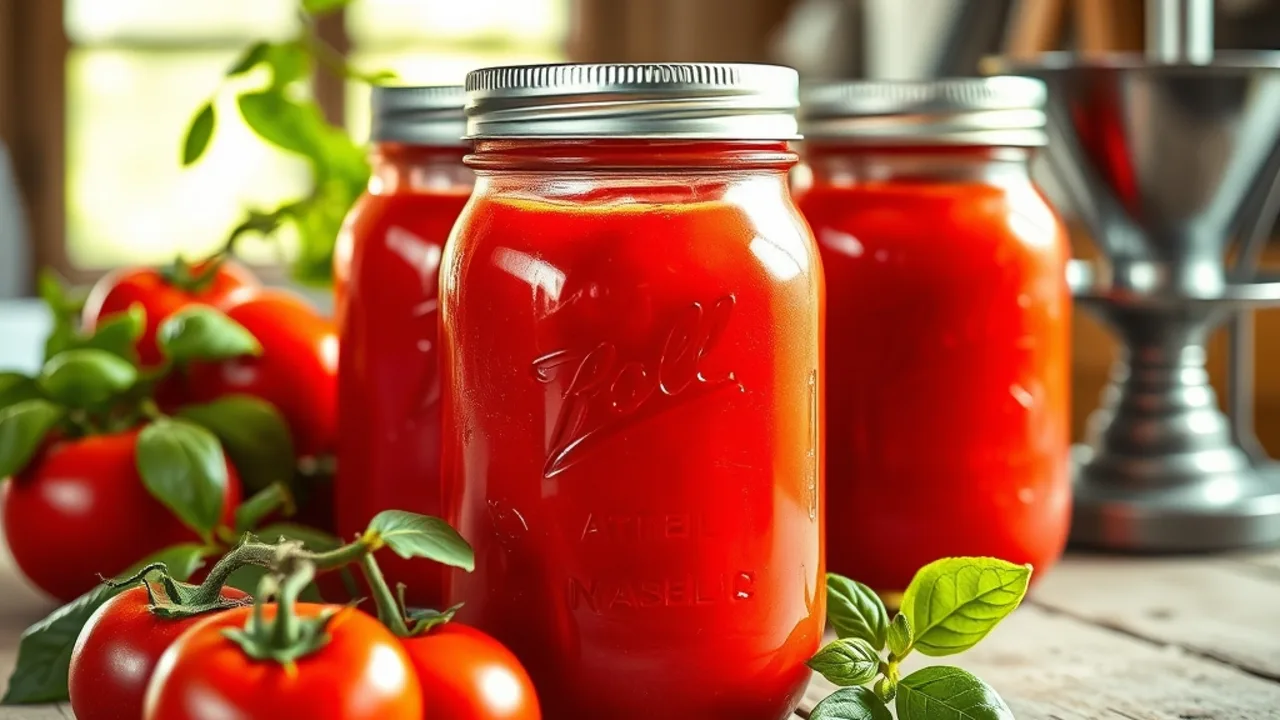
Learning the proper method for canning fresh tomato juice allows you to preserve the bright, vibrant flavor of vine-ripened summer produce to enjoy all year long. Whether your garden is overflowing or you grabbed a bushel from the farmers market, putting up your own pantry jars is deeply satisfying and simpler than you might think.
Quick Answer: To safely preserve fresh tomato juice using a boiling water canner, wash and chop ripe tomatoes, simmer them until soft, strain out the skins and seeds, and bring the juice back to a gentle boil. Add bottled lemon juice or citric acid to clean canning jars for safety, fill with hot juice leaving 1/2-inch headspace, and process pints for 35 minutes or quarts for 40 minutes in a boiling water bath (adjusting for elevation).
In This Article
- Why Acidification Is Mandatory for Tomato Juice
- Essential Equipment and Ingredients
- How to Make the Juice from Scratch
- Step-by-Step Water Bath Canning Guide
- How Long to Water Bath Tomato Juice
- Pressure Canning Tomato Juice Option
- Canning Fresh Tomato Juice Without a Canner
- Common Mistakes and Expert Tips
- Frequently Asked Questions
Why Acidification Is Mandatory for Tomato Juice
Before jumping into the kitchen steps, there is one crucial rule every home preserver must understand: natural tomato acidity varies widely. Modern tomato varieties often lack the high natural acid levels found in older heirloom varieties. Because tomatoes hover right around the safety threshold for botulism spores, trusted authorities such as the National Center for Home Food Preservation state that you must add acid when home canning tomato products.
Always add one of the following directly to each empty jar before pouring in the hot juice:
- Bottled Lemon Juice: Use 1 tablespoon per pint jar, or 2 tablespoons per quart jar. (Always use bottled juice rather than fresh lemons because bottled juice has a standardized pH level).
- Citric Acid: Use 1/4 teaspoon per pint jar, or 1/2 teaspoon per quart jar.
If you prefer a sweeter taste, you can balance the added tartness by stirring in 1 teaspoon of sugar per quart, but never reduce the acid.
Essential Equipment and Ingredients
Having your tools organized before you begin makes water bath canning tomato juice a calm, enjoyable project. A standard batch of 7 quarts typically requires about 22 to 24 pounds of fresh, ripe tomatoes.
Here is what you will need on hand:
- Ripe Tomatoes: Standard round slicers, heirloom varieties, or meaty Roma tomatoes work wonderfully. Roma tomatoes create a thicker body, while slicing tomatoes yield a lighter, traditional sip.
- Bottled Lemon Juice or Citric Acid: For tested food preservation safety.
- Canning Salt (Optional): Add 1/2 teaspoon per pint or 1 teaspoon per quart if you enjoy a savory sip. Do not use table salt, which contains anti-caking agents that make canning liquid cloudy.
- Glass Canning Jars, Lids, and Bands: Clean Ball or Kerr glass mason jars inspected for any nicks or cracks.
- Food Mill, Fine Mesh Sieve, or Chinois: To easily remove skins and seeds.
- Large Heavy-Bottom Stockpot: For simmering the fruit.
- Water Bath Canner with Rack: Or a deep stockpot fitted with an elevated wire or silicone rack.
- Jar Lifter and Canning Funnel: Essential tools for handling hot jars cleanly and safely.
How to Make the Juice from Scratch
If you want a comforting, old fashioned tomato juice recipe, the preparation method makes all the difference in preventing the juice from separating in the jar. Fresh tomatoes contain natural enzymes that break down pectin quickly. Heat inactivates these enzymes, ensuring your finished drink stays smooth and beautifully blended.
- Wash and Core: Rinse the tomatoes thoroughly under cool water, remove the stem scars, and slice them into quarters. Discard any bruised or questionable sections.
- Hot Break Method: Place about 1 pound of cut tomatoes into your large pot. Crush them with a potato masher over medium-high heat until boiling. Gradually add remaining tomato wedges, stirring constantly to keep the mixture bubbling vigorously. This rapid heating stops juice separation.
- Simmer until Soft: Once all tomatoes are in the pot, simmer gently for 5 to 10 minutes until the flesh is tender and completely collapsed.
- Strain Skins and Seeds: Run the hot mixture through a food mill or press it through a fine-mesh wire sieve using the back of a ladle. The silky juice will collect in a clean pot below. If you want to review basic kitchen prep, check out our guide on how to make fresh tomato juice for extra blending tips.
- Reheat: Return the strained juice to the pot and bring it to a gentle, active boil over medium heat before ladling into jars.
Step-by-Step Water Bath Canning Guide
Following established ball canning tomato juice recommendations ensures your pantry stays fully stocked with shelf-stable jars for up to 18 months.
- Warm Jars and Canner: Fill your water bath canner half-full of water and place it on the stove to heat up. Keep your clean mason jars warm in hot (not boiling) water so they do not crack when filled with hot juice.
- Add Acid: Place your measured bottled lemon juice or citric acid directly into the bottom of each warm jar. Add canning salt now if desired.
- Fill the Jars: Use a wide-mouth funnel to ladle the boiling tomato juice into the jars, leaving exactly 1/2-inch of headspace at the top. (Headspace is the empty space between the liquid and the jar rim).
- Remove Air Bubbles: Slide a non-metallic bubble tool or clean chopstick gently around the inside edges of the jar to dislodge trapped air pockets. Check and adjust the 1/2-inch headspace if the level dropped.
- Clean the Rims: Wipe the glass rim of each jar with a clean, damp paper towel to remove any stray drips that could break the seal.
- Apply Lids: Center the flat lid on each jar, apply the screw band, and turn it until fingertip tight. Avoid over-tightening, as air must escape during boiling.
- Process in Boiling Water: Lower the jars into the canner rack. Ensure at least 1 to 2 inches of water covers the tops of the lids. Put the canner lid on, bring to a rolling boil, and begin timing according to the chart below.
- Cool and Test Seals: Once the timer rings, turn off the heat, remove the canner lid, and let the jars sit in the hot water for 5 minutes. Lift jars straight up without tilting and place them onto a towel-lined counter spaced 1 inch apart. Let them sit untouched for 12 to 24 hours. Press the center of each lid; it should be firmly indented with no clicking sound.
How Long to Water Bath Tomato Juice
When asking how long to water bath tomato juice, altitude plays a vital role. Water boils at a lower temperature at higher elevations, so you must add processing time to guarantee safety.
| Altitude (Feet) | Pint Jars | Quart Jars |
|---|---|---|
| 0 - 1,000 ft | 35 minutes | 40 minutes |
| 1,001 - 3,000 ft | 40 minutes | 45 minutes |
| 3,001 - 6,000 ft | 45 minutes | 50 minutes |
| Above 6,000 ft | 50 minutes | 55 minutes |
Remember that the processing timer starts only after the water has returned to a full rolling boil with the canner lid securely in place.
Pressure Canning Tomato Juice Option
While water bath canning fresh tomato juice is the most common home method, pressure canning tomato juice is a fantastic alternative if you own a pressure canner. It significantly cuts down processing times while maintaining identical quality.
Even when using a pressure canner, you must still add the required bottled lemon juice or citric acid to each jar. For a weighted-gauge canner at 0 to 1,000 feet, process both pints and quarts at 10 pounds of pressure for just 15 minutes. Always let the pressure drop naturally to zero before opening the lid.
Canning Fresh Tomato Juice Without a Canner
If you find yourself canning fresh tomato juice without a canner, you do not need to purchase a specialized enamel pot. Any large, deep stockpot in your kitchen works just as well for canning tomato juice water bath style, provided it satisfies two requirements:
- Sufficient Depth: The pot must be tall enough to accommodate your jars while allowing 1 to 2 inches of water over the lids plus an additional 2 inches of rolling boiling headspace so it does not spill over.
- Bottom Protection: Glass jars must never sit directly against the metal bottom of the pot, or they will break from direct heat. Place a silicone trivet, a round cake cooling rack, or several linked metal canning rings at the bottom of the pot to elevate the jars.
However, you should avoid any outdated idea of canning tomato juice without water bath or pressure processing (often referred to as oven canning or open-kettle canning). Inverting hot jars on a counter or baking them in an oven does not reach the dependable temperatures required to destroy microorganisms, posing serious food-borne illness risks.
Common Mistakes and Expert Tips
- Watery Layer on the Bottom: If your preserved jars separate into clear liquid and red pulp, do not worry; they are still completely safe to drink. This occurs when tomatoes are heated too slowly. Simply shake the jar before pouring.
- Never Use Overripe Tomatoes: Avoid fruit taken from dead, frost-bitten, or diseased vines, as their acid levels are unpredictably low. Use firm, freshly picked ripe fruit.
- Spicing and Serving: Plain juice can be transformed into delicious homemade drinks whenever you open a jar. Combine your preserved juice with savory spices and horseradish for a homemade bloody mary mix from fresh tomatoes, or pair it with seafood broth to make your own version of canning homemade clamato juice.
Frequently Asked Questions
Can I can fresh tomato juice without adding lemon juice?
No, you should never omit the acid when canning tomato juice. Modern tomatoes do not always have enough natural acidity to prevent bacterial growth safely, making standardized bottled lemon juice or citric acid necessary for shelf-stable jars.
Can I add fresh celery or onions to the juice before canning?
Adding low-acid vegetables such as celery, peppers, garlic, or onions changes the acidity of the recipe. If you add these ingredients, you must follow an approved, laboratory-tested mixed vegetable juice recipe and process the jars in a pressure canner rather than a boiling water bath.
How long does home canned tomato juice last in storage?
When stored in a cool, dark, and dry pantry between 50°F and 70°F, properly sealed tomato juice keeps its best flavor and color for 12 to 18 months. Remove the metal screw bands before storing to prevent rings from rusting onto the jars.
Why did my canning lids fail to seal?
Lids fail to seal if food residue was left on the jar rim, if the screw band was tightened too firmly, or if the jars were tilted while being lifted from the canner. Any unsealed jars can be stored in the refrigerator and consumed within one week, or frozen in freezer-safe containers.
Mastering the technique for canning fresh tomato juice is one of the most rewarding culinary traditions for any home cook. With just ripe garden fruit, clean jars, and a simple water bath pot, you can build a reliable pantry shelf full of pure, vibrant nutrition. Once you taste the refreshing difference of your own preserved harvest, you will never want store-bought bottles again.
You might also like reading our complete step-by-step recipe for tomato juice from fresh tomatoes to explore more ways to cook and strain your garden bounty.


